Alif Collection
Coins of the Taifa kingdoms
(404–503 A.H. / 1013–1110 A.D.)
NEXT => the Almoravids
PREVIOUS => the Hammudids
BACK to the Main Page
The Taifas were the rival dynasties that ruled al-Andalus between the collapse of the Umayyad caliphate of Spain circa 399 A.H. / 1009 A.D. and the Almoravid occupation of al-Andalus. The different Taifa kingdoms supported either an Hammudid caliph, an Umayyad caliph or even a neutral and generic caliph ʿAbd Allāh (Servant of God) which is a possible reference to the ʿAbbasid caliph of Baghdad or to a fictitious caliph (Ariza-2 pp. 81–82, Ibrahim, Wasserstein pp. 98–119). In addition to dinars and dirhams they also struck Handūsīs, which are official fractional coins struck on shaped blanks (hacksilber) with official dies used for full denominations (dinar or dirham). Consequently, only a portion of the inscription can be read (see Francés).
- ʿĀmirids of Valencia (412–478 A.H. / 1021–1085 A.D.)
- Dhu`l-Nunids of Toledo (409–483 A.H. / 1018–1090 A.D.)
- al-Ẓāfir Ismāʿīl (circa 423–435 A.H. / 1032–1043 A.D.)
- Sharaf al-Dawla Yaḥyā I (al-Maʾmūn) (435–467 A.H. / 1043–1075 A.D.)
- al-Qādir bi-llāh Yaḥyā II (467–483 A.H. / 1075–1090 A.D.)
- Zirids of Granada (403–483 A.H. / 1013–1090 A.D.)
- Sumaydihids of Almeria (433–484 A.H. / 1042–1091 A.D.)
- Aftasids of Badajoz (413–487 A.H. / 1022–1094 A.D.)
- Kingdom of Tortosa (427–453 A.H. / 1036–1061 A.D.)
- Jahwarids of Cordoba (422–461 A.H. / 1031–1069 A.D.)
- ʿAbbādids of Sevilla (414–484 A.H. / 1023–1091 A.D.)
- Al Mu`tadid ʿAbbād (433–461 A.H. / 1042–1069 A.D.)
- Al Mu`tamid Muḥammad (461–484 A.H. / 1069–1091 A.D.)
- Hudids of Zaragoza and Denia (431–503 A.H. / 1039–1110 A.D.)
ʿĀmirids of Valencia (412–478 A.H. / 1021–1085 A.D.)
In 411 A.H., the slaves of Valencia revolted and handed power to ʿAbd al-ʿAzīz b. Abī ʿĀmir
(son of Sanchuelo, ʿĀmir’s own grandson). Like his grandfather, he bore the title of al-Manṣūr (the victorious).
Almeria became part of the territories of the Taifa of Valencia in 429 A.H. (Ariza-2 pp. 128–131).
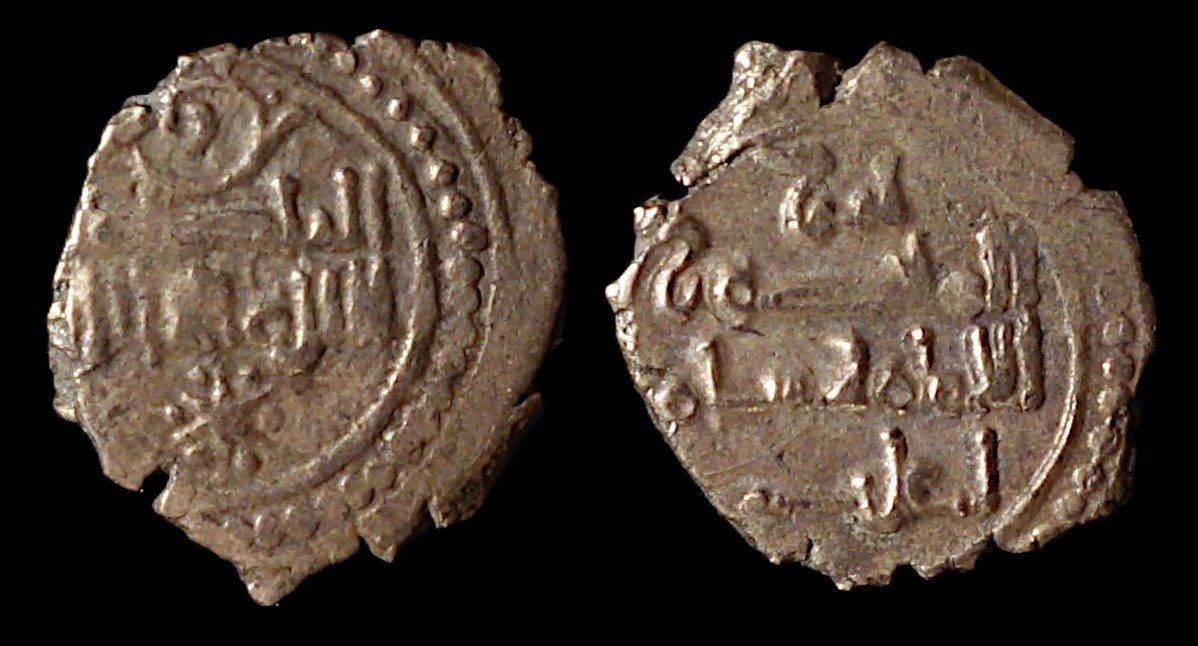
#1.5.14.3.1 ʿAbd al-ʿAzīz al-Manṣūr Fractional dinar (0.78 g, 11 mm) citing al-Nāṣir (obv.) and ibn Aghlab and Hishām II (rev.) No mint, no date Struck in Valencia Miles 168, Vives 1065, Prieto 158, Medina 92, Album 375 Al-Nasir is probably one of ʿAbd al-ʿAzīz's sons, designated as his heir (Album p. 68, Ariza-2 p. 134). Ibn Aghlab is not identified. Click on the image to enlarge it. Comments? webmaster@coins.alif2.fr |
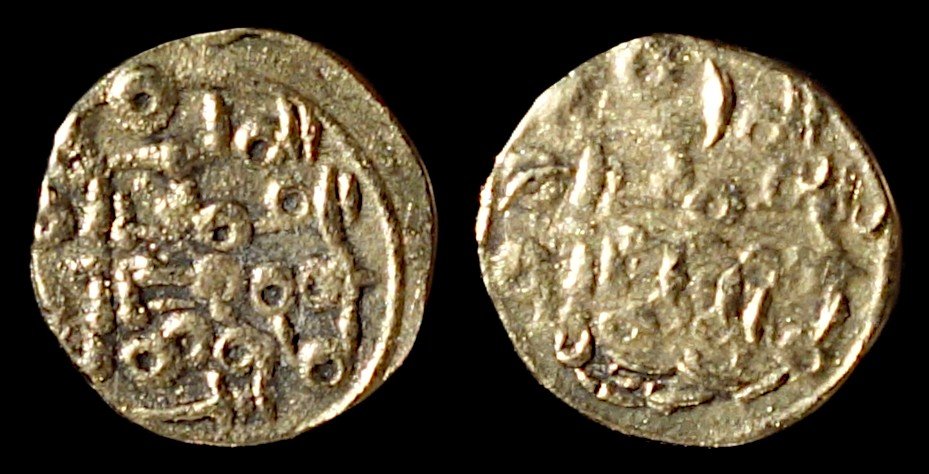
#1.5.14.3.2 ʿAbd al-ʿAzīz al-Manṣūr Fractional dinar (0.71 g, 8 mm) citing Hishām II (obv. and rev.) No mint, no date Struck in Almeria. Mule coin made from two reverse dies of Miles 192-248 and Medina 81, 82 and 84. Album 379 Click on the image to enlarge it. Comments? webmaster@coins.alif2.fr |
Back to top
Dhu`l-Nunids of Toledo (423–483 A.H. / 1032–1090 A.D.)
The Dhu'l-Nunids were a Berber dynasty descended from one of the tribes that arrived in the Iberian Peninsula
at the very time of the conquest, as part of the troops that landed with Tariq ibn Ziyad (Ariza-2 p. 87).
They settled east of Toledo and took control of Toledo during the Cordoba Revolution (fitna),
and the young al-Ẓāfir Ismāʿīl came to power, becoming one of the
first Taifa kings to break with the central Andalusian power (Ariza-2 pp. 87–92).
al-Ẓāfir Ismāʿīl (circa 423–435 A.H. / 1032–1043 A.D.)
Al-Zafir Ismāʿīl remained outside the struggles for the caliphate, recognizing neither the Hammudids nor the Umayyads,
and his coins bear the name of the generic caliph ʿAbd Allāh (Servant of God) (Ariza-2 pp. 88–89).
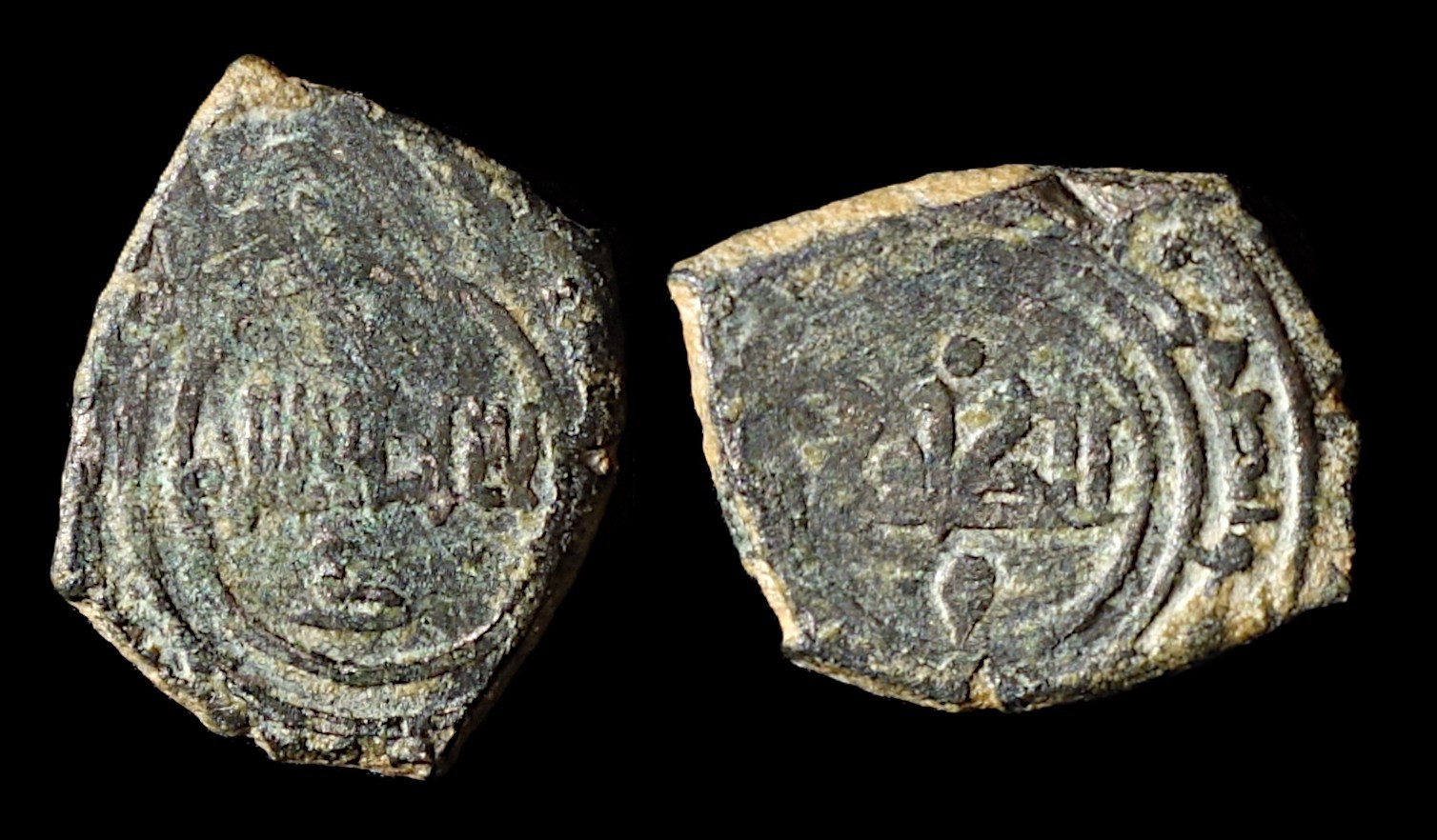
#1.5.13.2.1 Ismāʿīl (al-Ẓāfir) Debased Fractional dinar (billon Handūsī) (1.25 g, 8 × 11 mm) Mint missing, date missing Francés 152, Vives 1083, Prieto 321c, Album 395 Click on the image to enlarge it. Comments? webmaster@coins.alif2.fr |
Back to top
Sharaf al-Dawla Yaḥyā I (al-Maʾmūn) (435–467 A.H. / 1043–1075 A.D.)
Following the death of Al-Zafir Ismāʿīl (435 A.H. / 1043 A.D.), his son Yaḥyā al-Maʾmūn succeeded him, taking the title of Dhu al-Majdayn
(the doubly victorious – in this life and the hereafter) and that of Sharaf al-Dawla (Honor of the State). Under his reign,
the court of Toledo reached its zenith and attracted scholars and poets from Kairouan, Egypt, and Baghdad. Unlike his father, he eventually recognized a caliph.
In 436 A.H. (1044–1045 A.D.), he pledged allegiance to the self-proclaimed Hishām II, proclaimed in Seville, and minted coins in his name.
However, he did not acknowledge him as amir al-muʾminīn, which suggests the coerced nature of this recognition (Ariza-2, pp. 87–88).
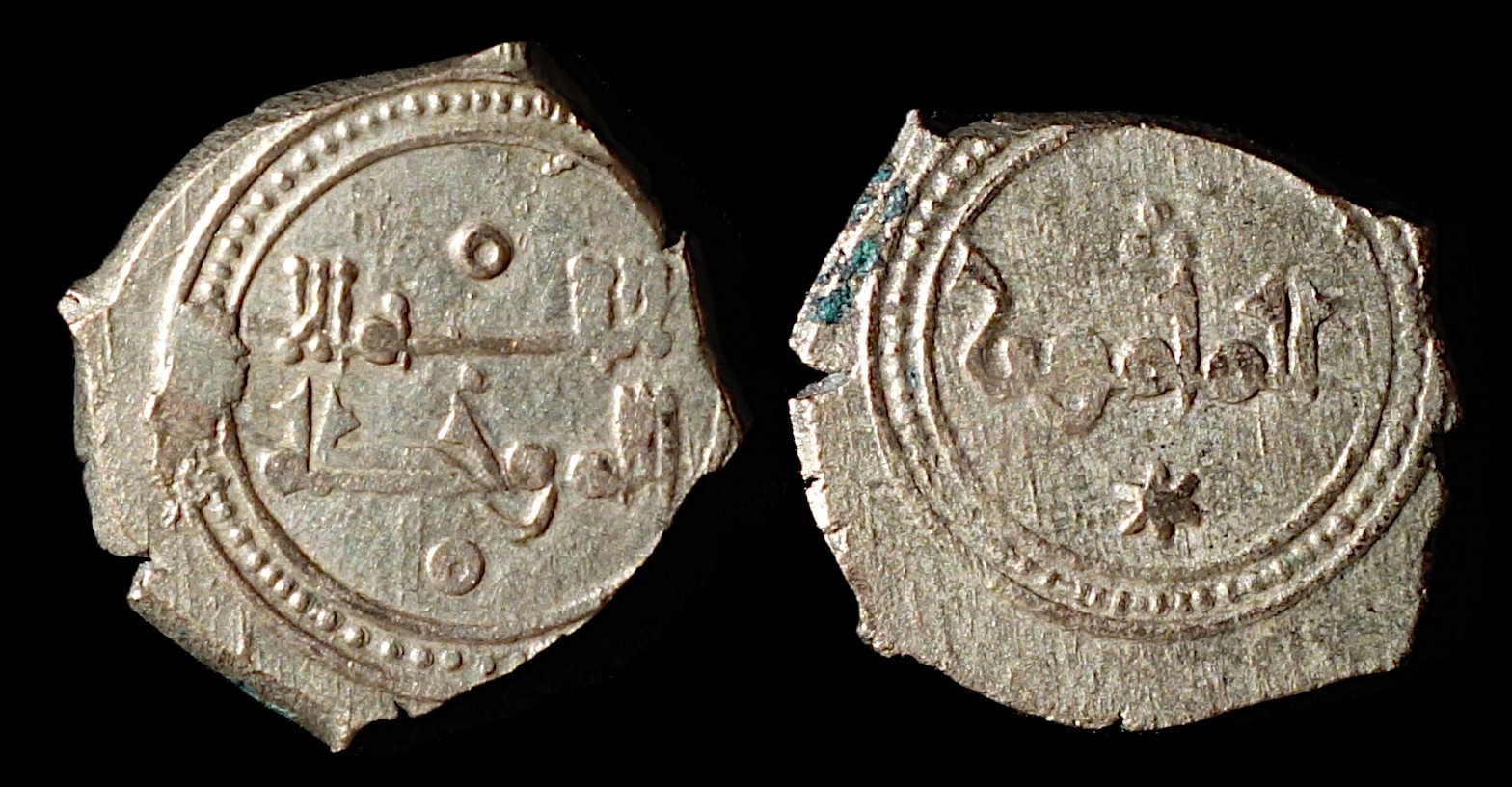
#1.5.13.3.2 Yaḥyā I (al-Maʾmūn) Fractional dinar (1.81 g, 15 mm) No mint, no date Vives 1100, Prieto 335, Album 396 Click on the image to enlarge it. Comments? webmaster@coins.alif2.fr |
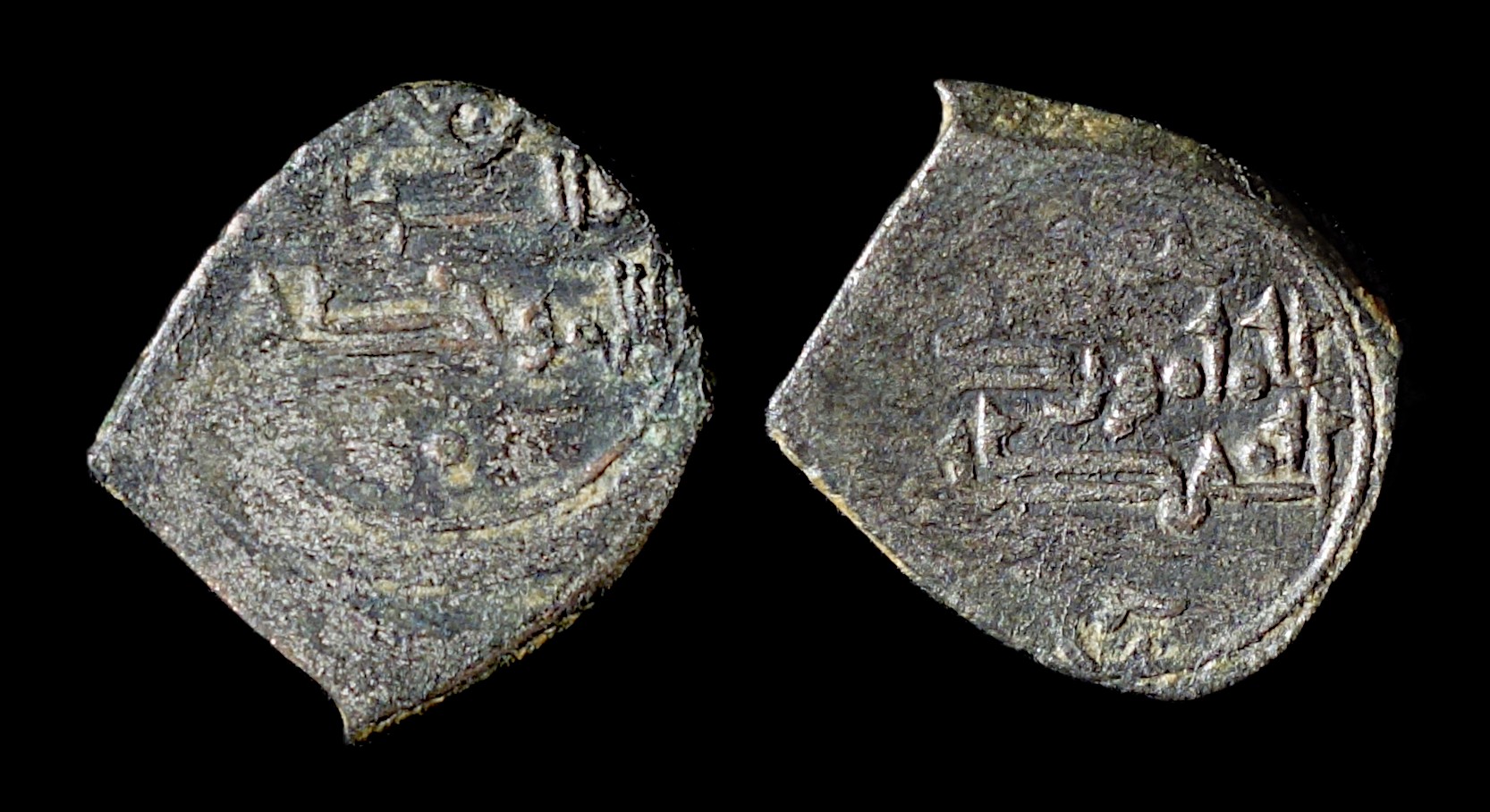
#1.5.13.3.1 Yaḥyā I (al-Maʾmūn) Debased fractional Dinar (billon Handūsī) (1.07 g, 15 × 12 mm) with title Dhu al-Majdayn (reverse) No mint, no date Vives 1099, Album 396 Click on the image to enlarge it. Comments? webmaster@coins.alif2.fr |
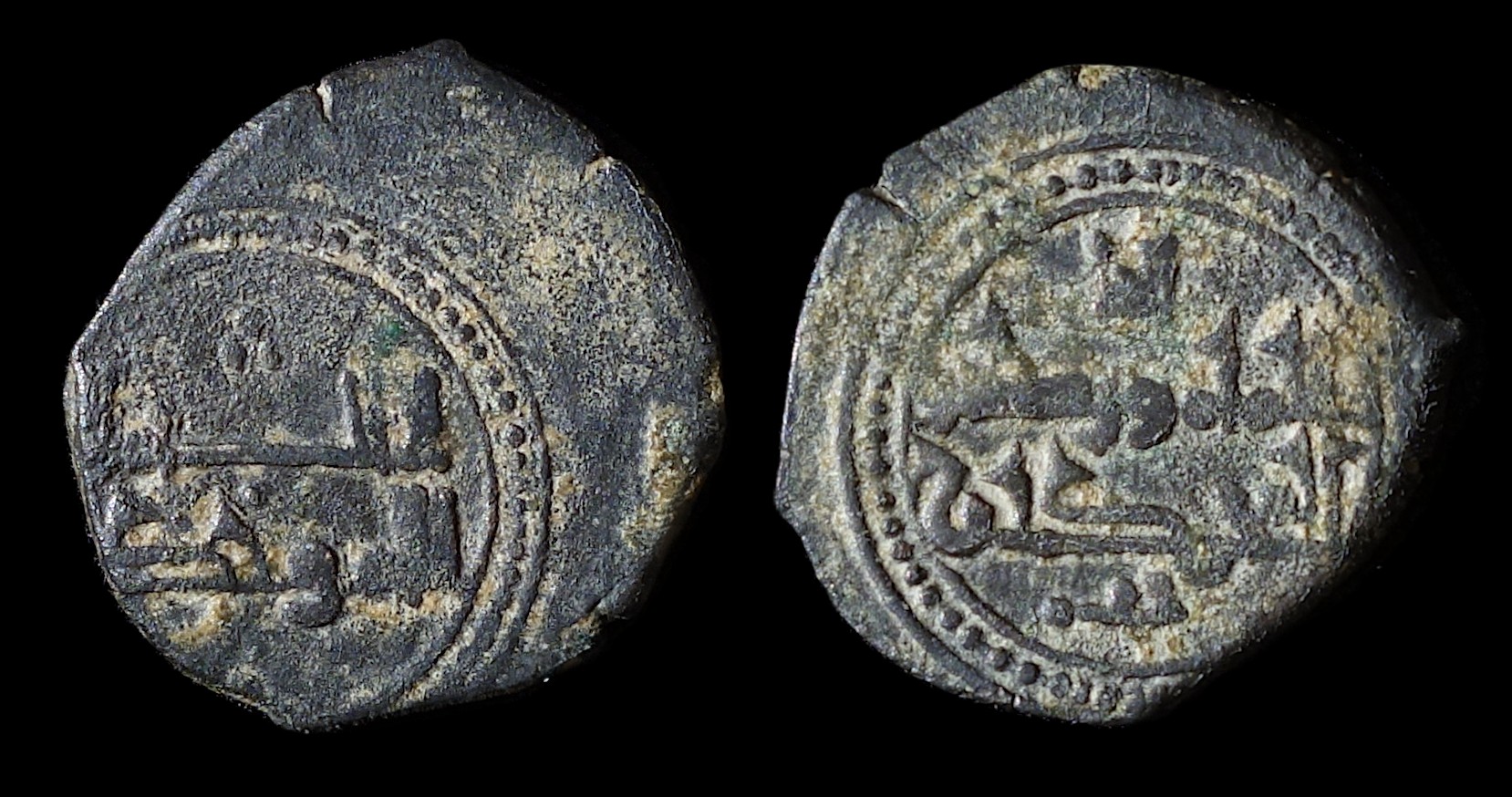
#1.5.13.3.3 Yaḥyā I (al-Maʾmūn) Copper dirham (1.03 g, 15 mm) with title Dhu al-Majdayn (reverse) No mint, no date Francés 173, Med.-Fro. II.2, Album 397 Click on the image to enlarge it. Comments? webmaster@coins.alif2.fr |
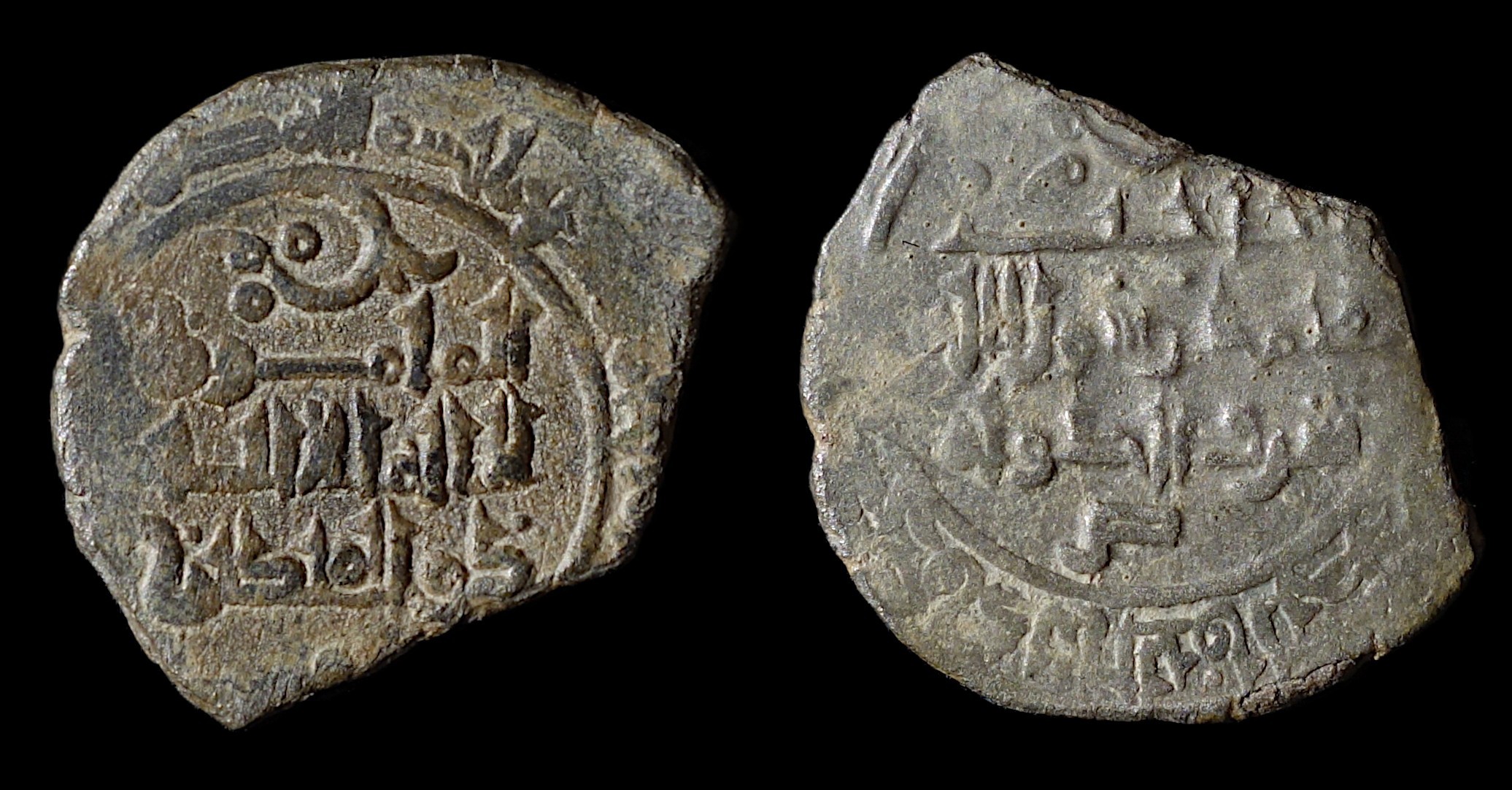
#1.5.13.3.4 Yaḥyā I (al-Maʾmūn) Copper dirham (2.04 g, 21 × 18 mm) with titles Dhu al-Majdayn (obverse) and Sharaf al-Dawla (reverse) Mint missing, date missing Type of Vives 1109, Album 397 Click on the image to enlarge it. Comments? webmaster@coins.alif2.fr |
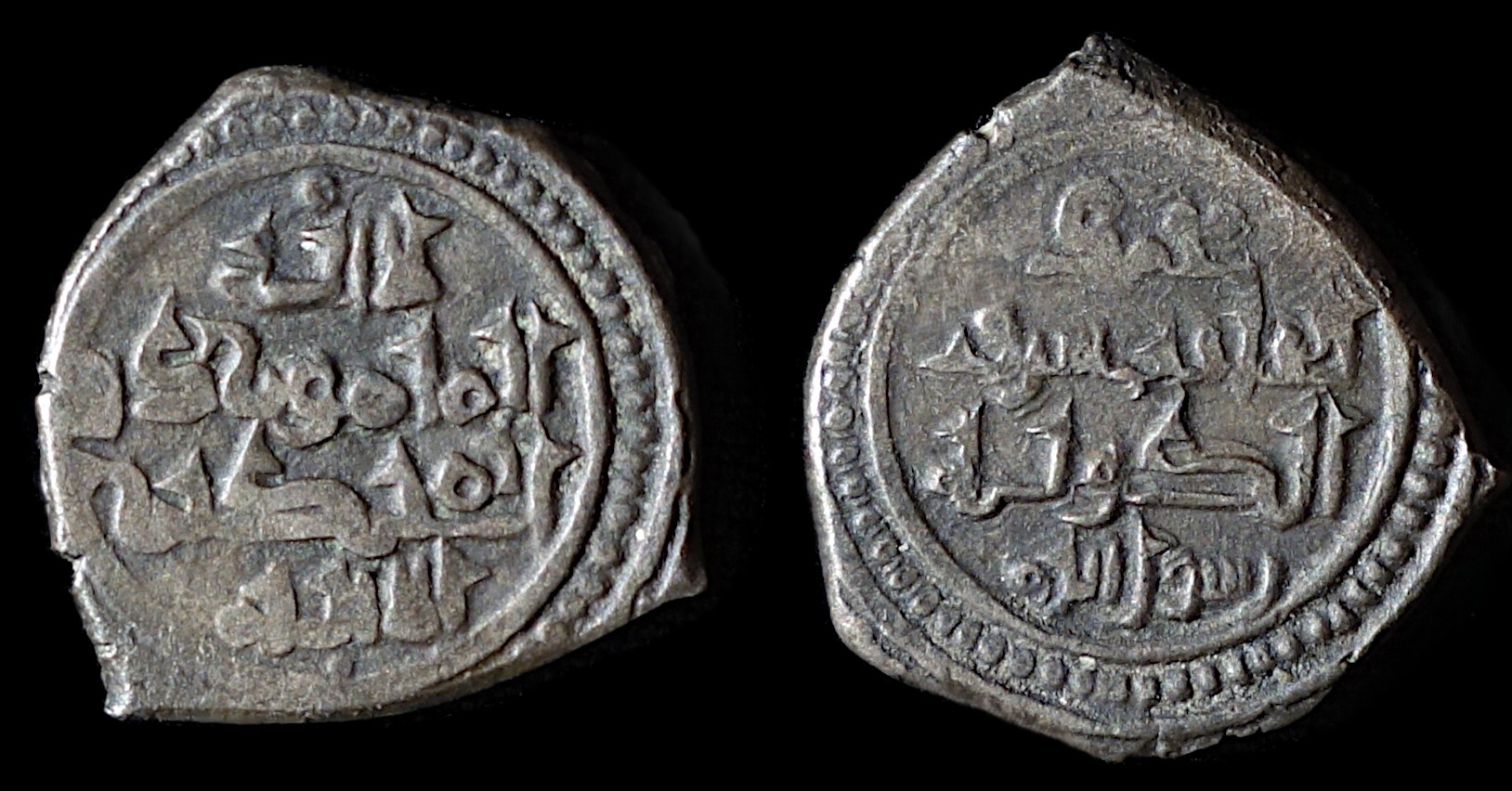
#1.5.13.3.5 Yaḥyā I (al-Maʾmūn) Copper dirham (Handūsī) (1.58 g, 15 mm) with titles Dhu al-Majdayn (obverse) and Sharaf al-Dawla (reverse) Mint missing, date missing Francés 163-172, type of Vives 1111, Album 397 Click on the image to enlarge it. Comments? webmaster@coins.alif2.fr |
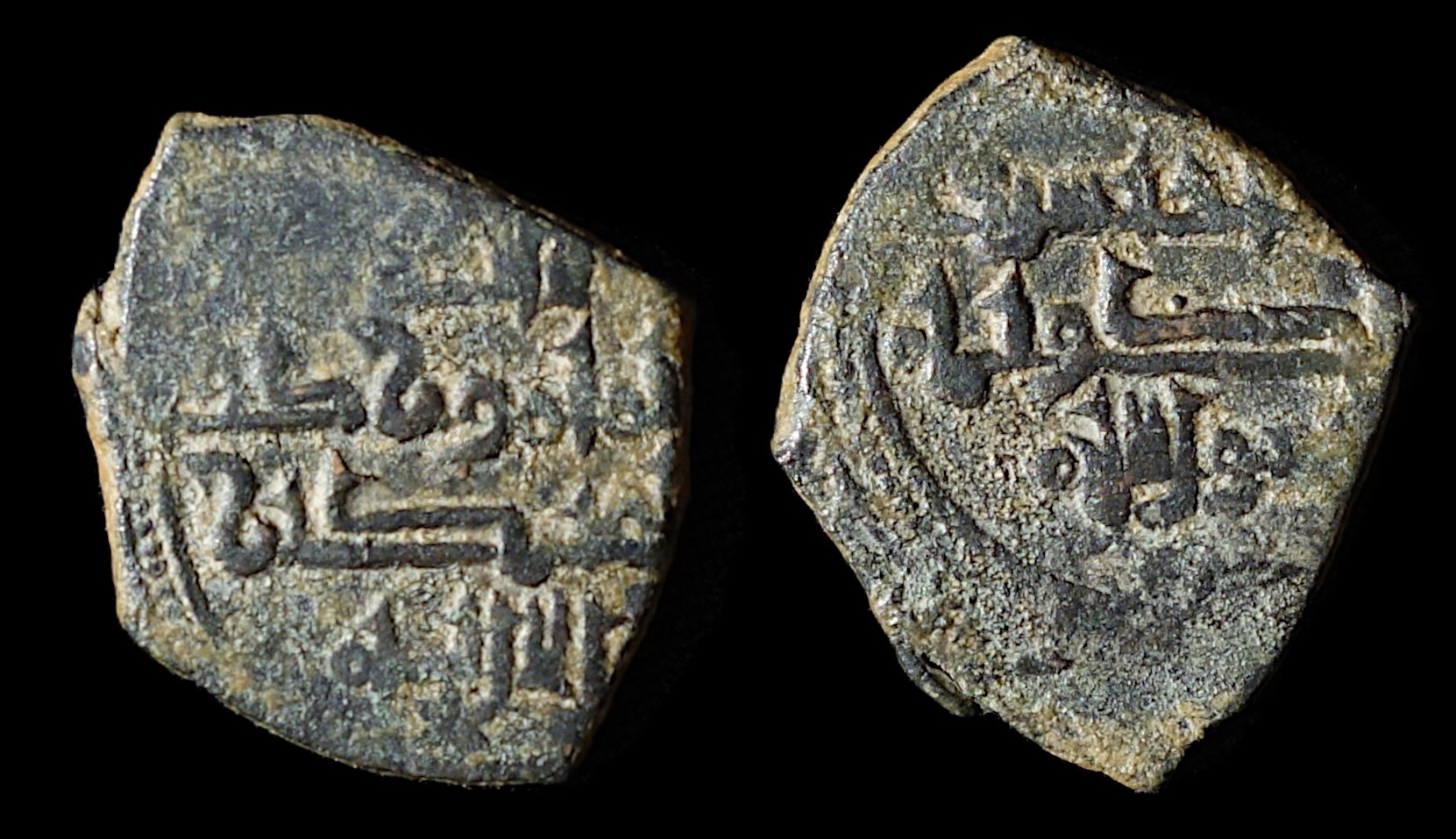
#1.5.13.3.10 Yaḥyā I (al-Maʾmūn) Copper dirham (Handūsī) (1.78 g, 18 × 15 mm) with titles Dhu al-Majdayn (obverse) and Sharaf al-Dawla (reverse) Mint missing, date missing Francés 163-172, type of Vives 1111, Album 397 Click on the image to enlarge it. Comments? webmaster@coins.alif2.fr |
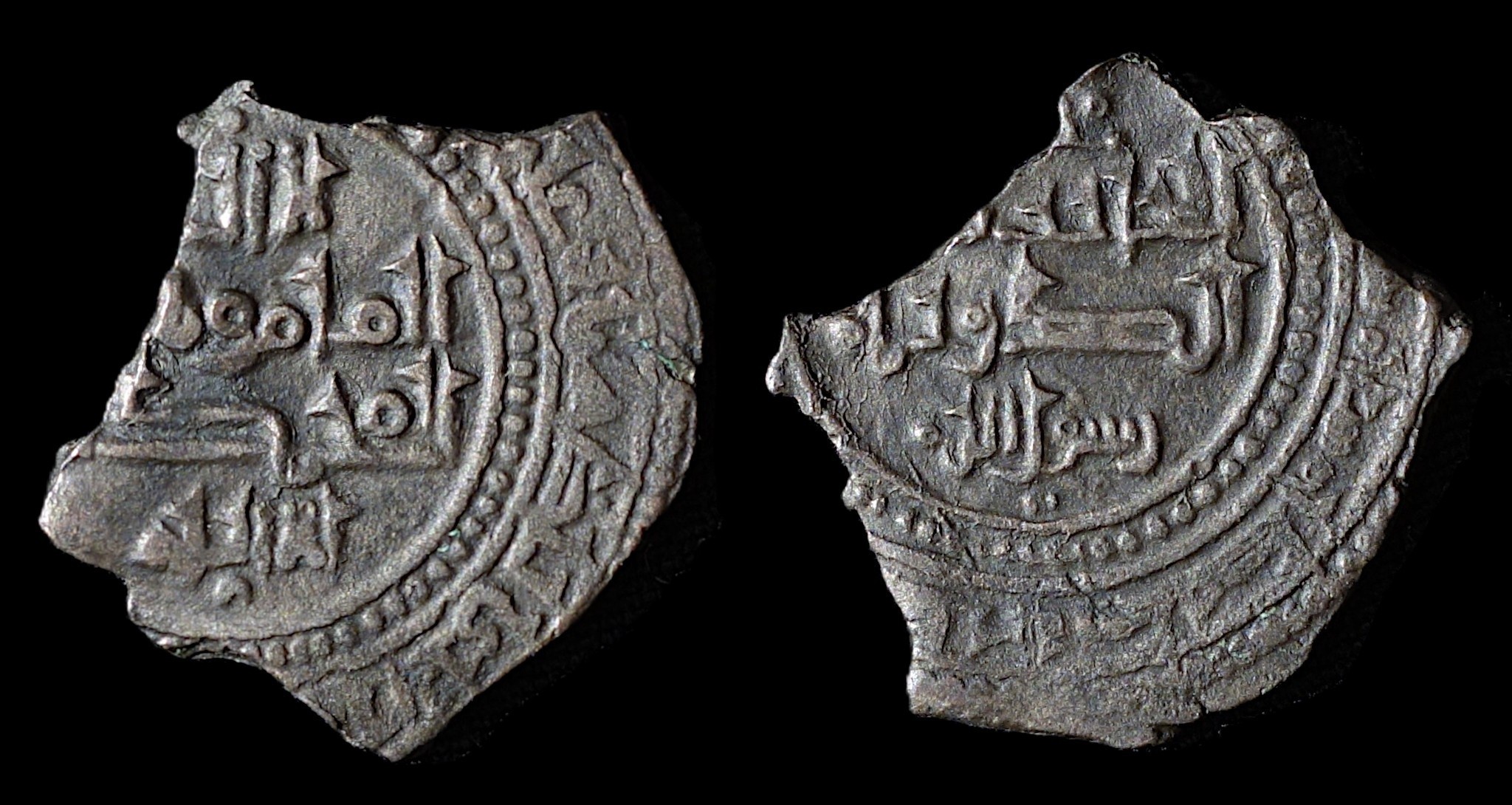
#1.5.13.3.7 Yaḥyā I (al-Maʾmūn) Copper dirham (1.87 g, 19 × 20 mm) with titles Dhu al-Majdayn (obverse) and Sharaf al-Dawla (reverse) Ṭulayṭula, [46]6 A.H. or [46]7 A.H. Vives 1112 or 1113, Album 397 Click on the image to enlarge it. Comments? webmaster@coins.alif2.fr |
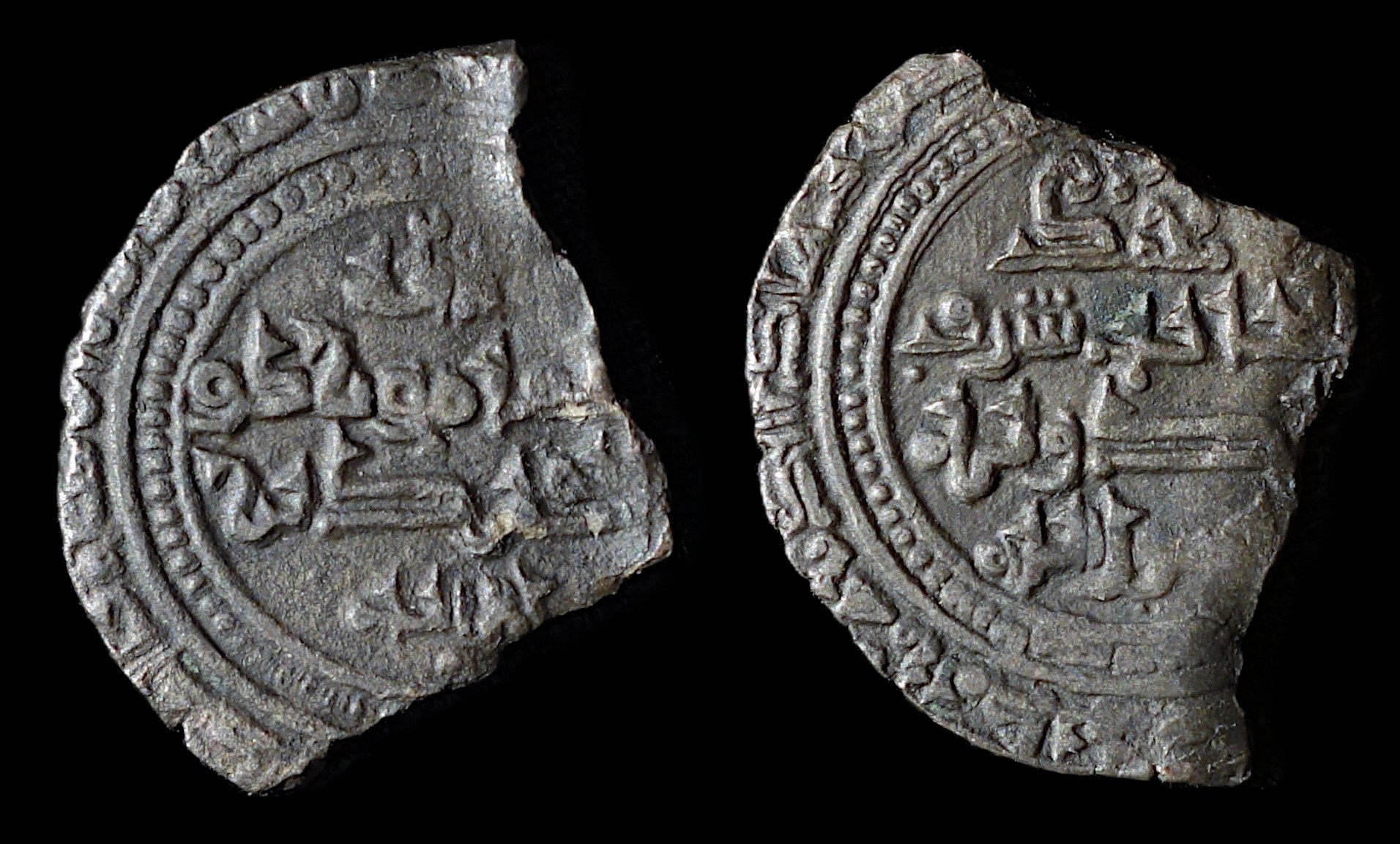
#1.5.13.3.8 Yaḥyā I (al-Maʾmūn) Copper dirham (1.67 g, 22 × 18 mm) with titles Dhu al-Majdayn (obverse) and Sharaf al-Dawla (reverse) Mint missing, date missing Type of Vives 1111, Album 397 This coin is illustrated as #3 in Bofarull p.201. Click on the image to enlarge it. Comments? webmaster@coins.alif2.fr |
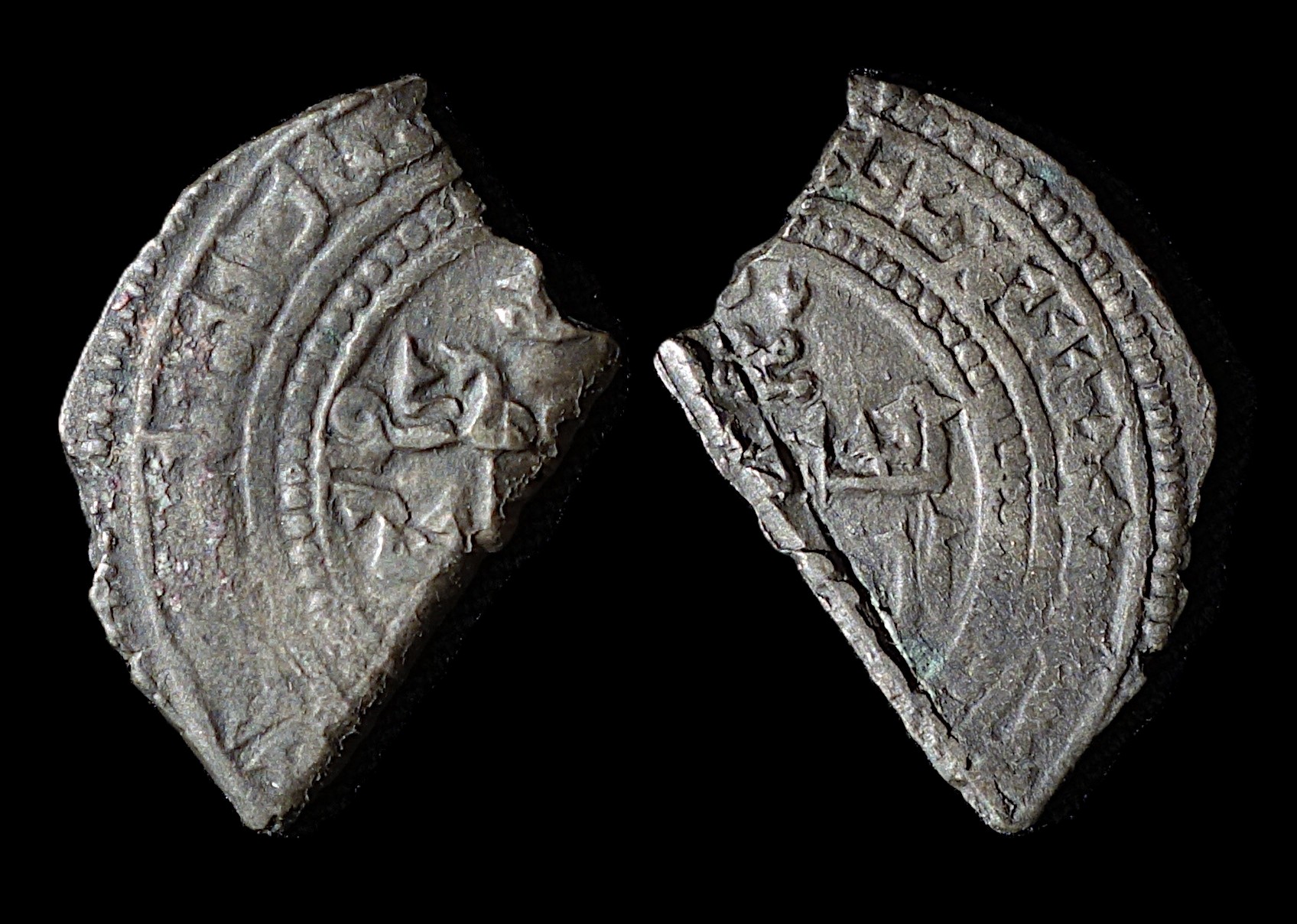
#1.5.13.3.6 Yaḥyā I (al-Maʾmūn) Copper dirham (1.21 g, 21 × 14 mm) with titles Dhu al-Majdayn (obverse) and Sharaf al-Dawla (reverse) Mint missing (Ṭulayṭula), 465 A.H. Vives 1111, Album 397 Click on the image to enlarge it. Comments? webmaster@coins.alif2.fr |
Back to top
al-Qādir bi-llāh Yaḥyā II (467–483 A.H. / 1075–1090 A.D.)
Al-Qadir bi-llāh Yaḥyā succeeded his grandfather Yaḥyā al-Maʾmūn, and his incompetence and disastrous decisions caused him to lose Toledo and its region, which fell under the authority of the Christians (EI2).
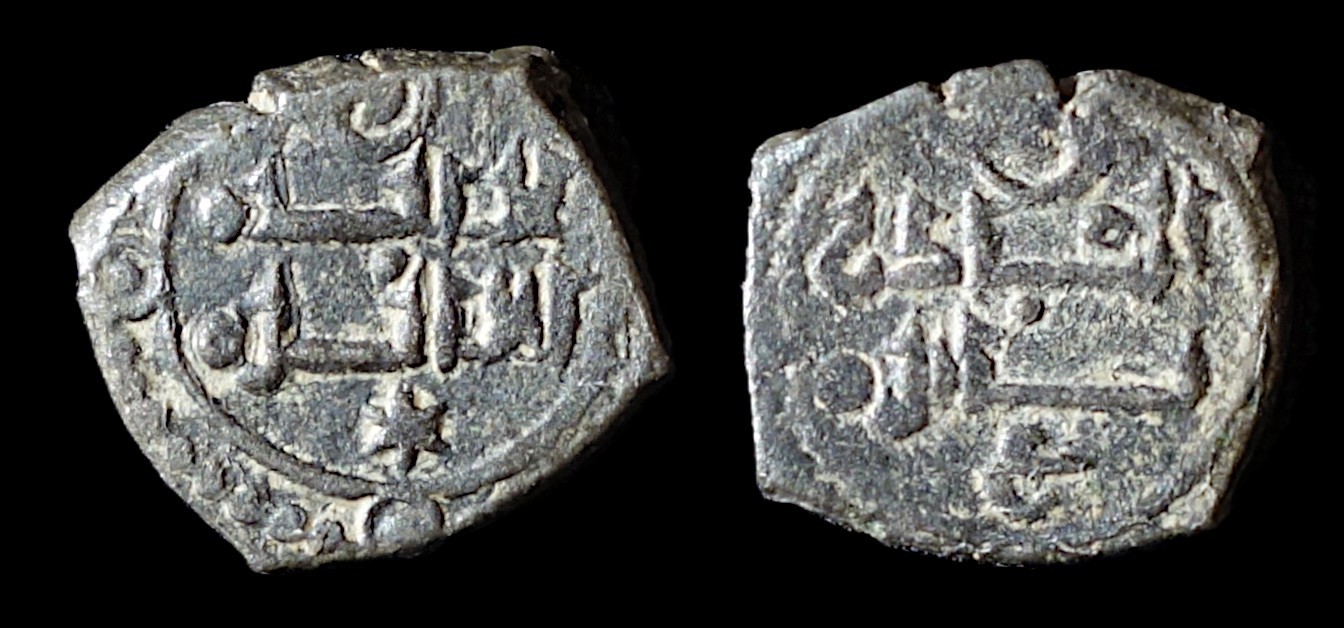
#1.5.13.4.3 Yaḥyā II (al-Qādir) Debased fractional Dinar (billon Handūsī) (0.88 g, 11 mm) No mint, no date Francés pp. 70–72, Miles 525, Vives 1127, Prieto 348, Album T398 Click on the image to enlarge it. Comments? webmaster@coins.alif2.fr |
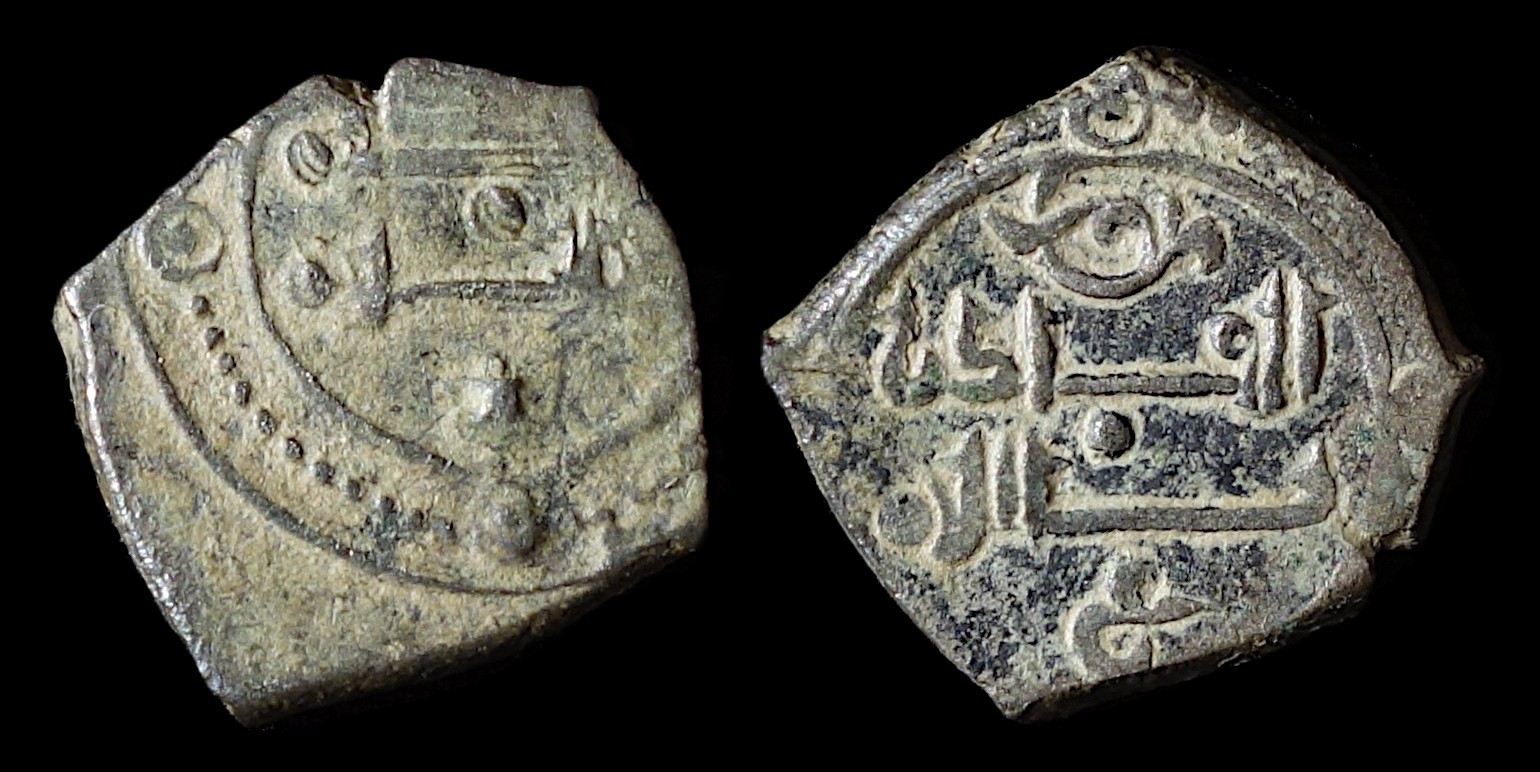
#1.5.13.4.4 Yaḥyā II (al-Qādir) Debased fractional Dinar (billon Handūsī) (1.44 g, 14 mm) No mint, no date Francés pp. 70–72, Miles 525, Vives 1127, Prieto 348, Album T398 Click on the image to enlarge it. Comments? webmaster@coins.alif2.fr |
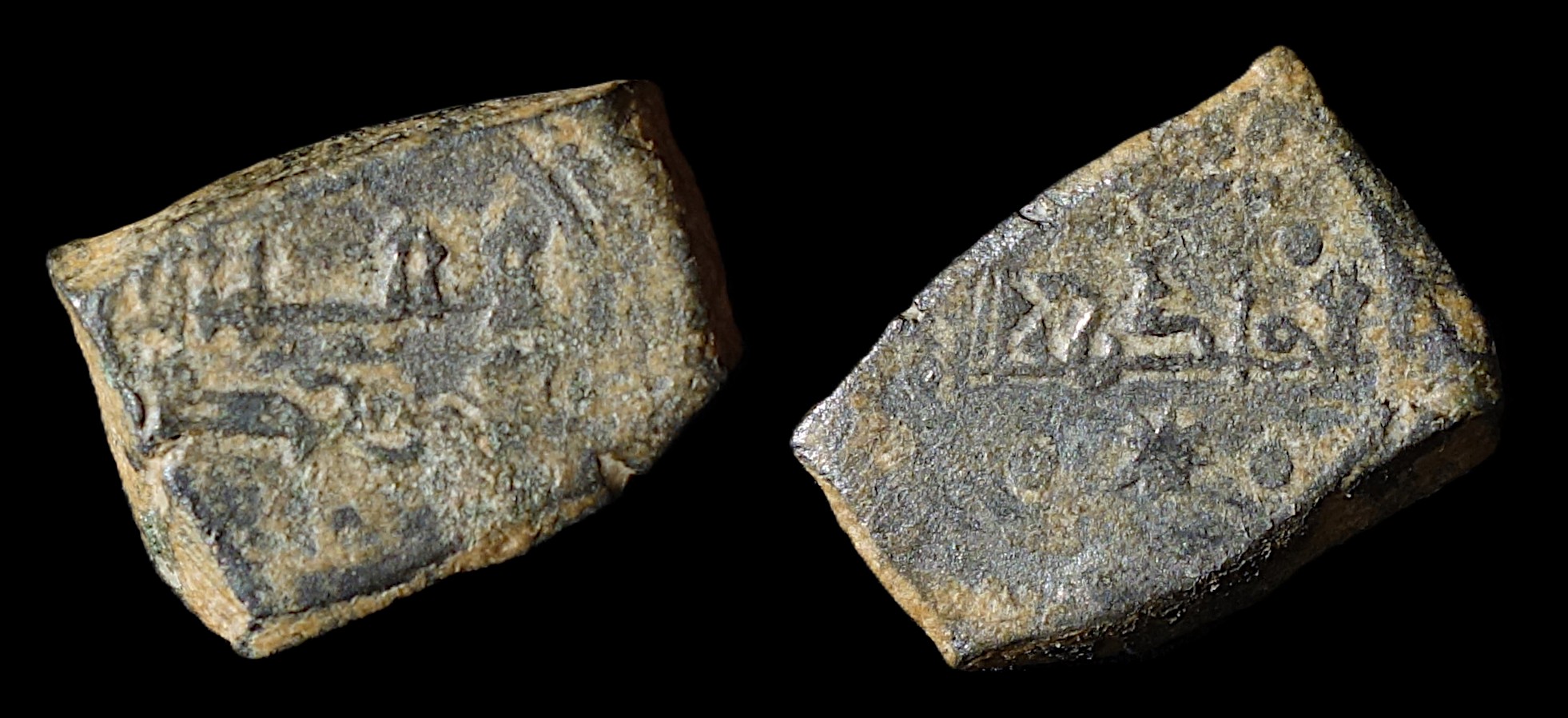
#1.5.13.4.6 Yaḥyā II (al-Qādir) Copper dirham (Handūsī) (3.13 g, 16 × 12 mm) Mint missing, date missing Francés 199, Vives 1126, Prieto 347a, Album 398 Click on the image to enlarge it. Comments? webmaster@coins.alif2.fr |
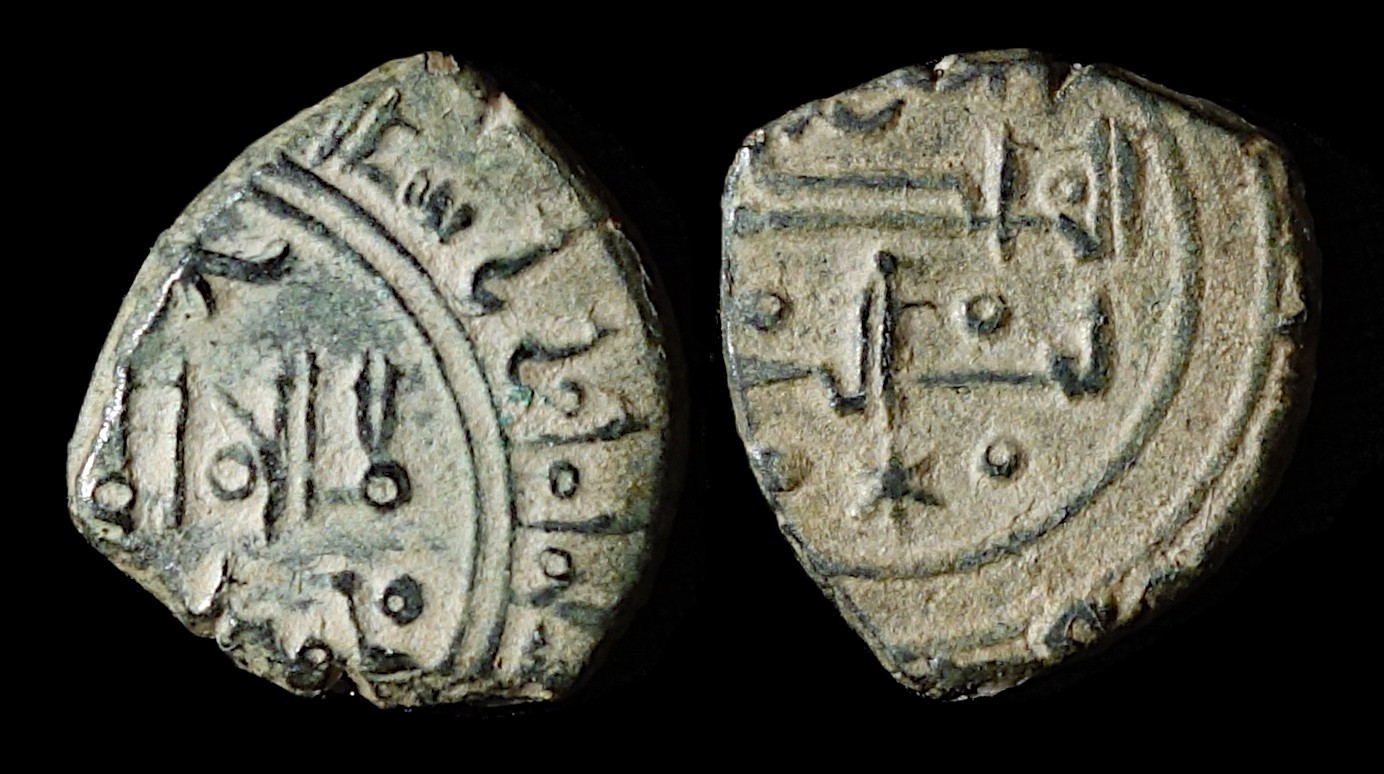
#1.5.13.4.5 Yaḥyā II (al-Qādir) Copper dirham (Handūsī) (1.41 g, 13 mm) Mint missing, [4]68 A.H. Francés p. 68, Vives 1117, Album 398 Click on the image to enlarge it. Comments? webmaster@coins.alif2.fr |
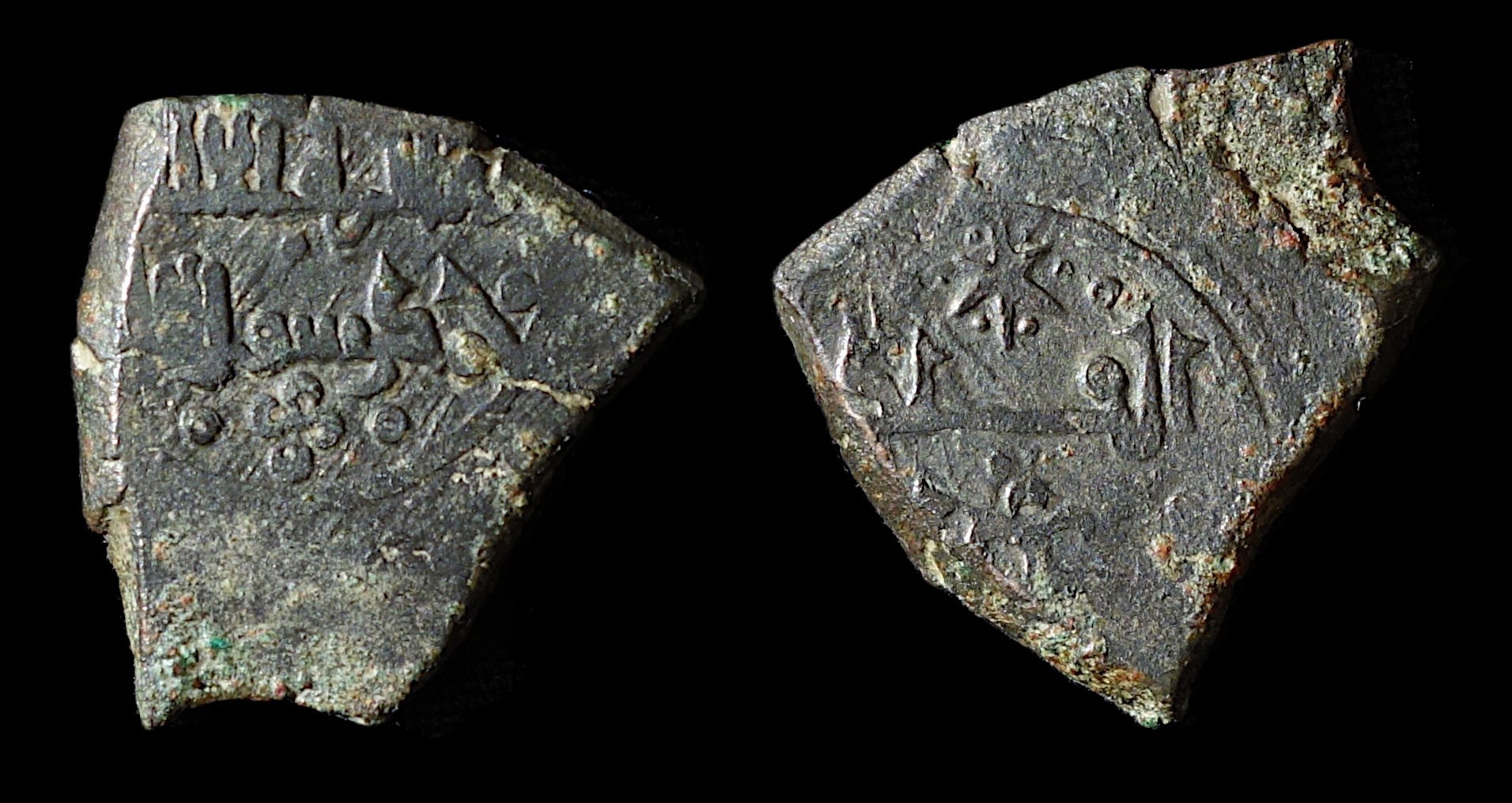
#1.5.13.4.7 Yaḥyā II (al-Qādir) Copper dirham (Handūsī) (2.81 g, 16 × 7 mm) Mint missing, date missing Francés 195, type of Vives 1116, Album 398 Click on the image to enlarge it. Comments? webmaster@coins.alif2.fr |
Back to top
Zirids of Granada (403–483 A.H. / 1013–1090 A.D.)
The Zirids were Fatimid allies in North Africa in the early 4th century A.H.
Some of them came from Tunisia to Granada later in the 4th century A.H. (Album p. 67).
Bādīs b. Ḥabbūs (circa 429–465 A.H. / 1038-1073)
Bādīs b. Ḥabbūs supported the Hammudid Caliphate and Idris II b. Yaḥyā al-ʿAlī (Ariza-2 pp. 103–107, Clément p. 243).
He assassinated Muḥammad I al-Mahdī of Mālaqa by offering him a poisoned vase
to support Muḥammad I al-Mahdī of al-Jazīra (Ariza pp. 301–302, Ariza-2 p. 106, Clément p. 244).
He ultimately conquered the Hammudid Caliphate (Ariza-2 p. 107).
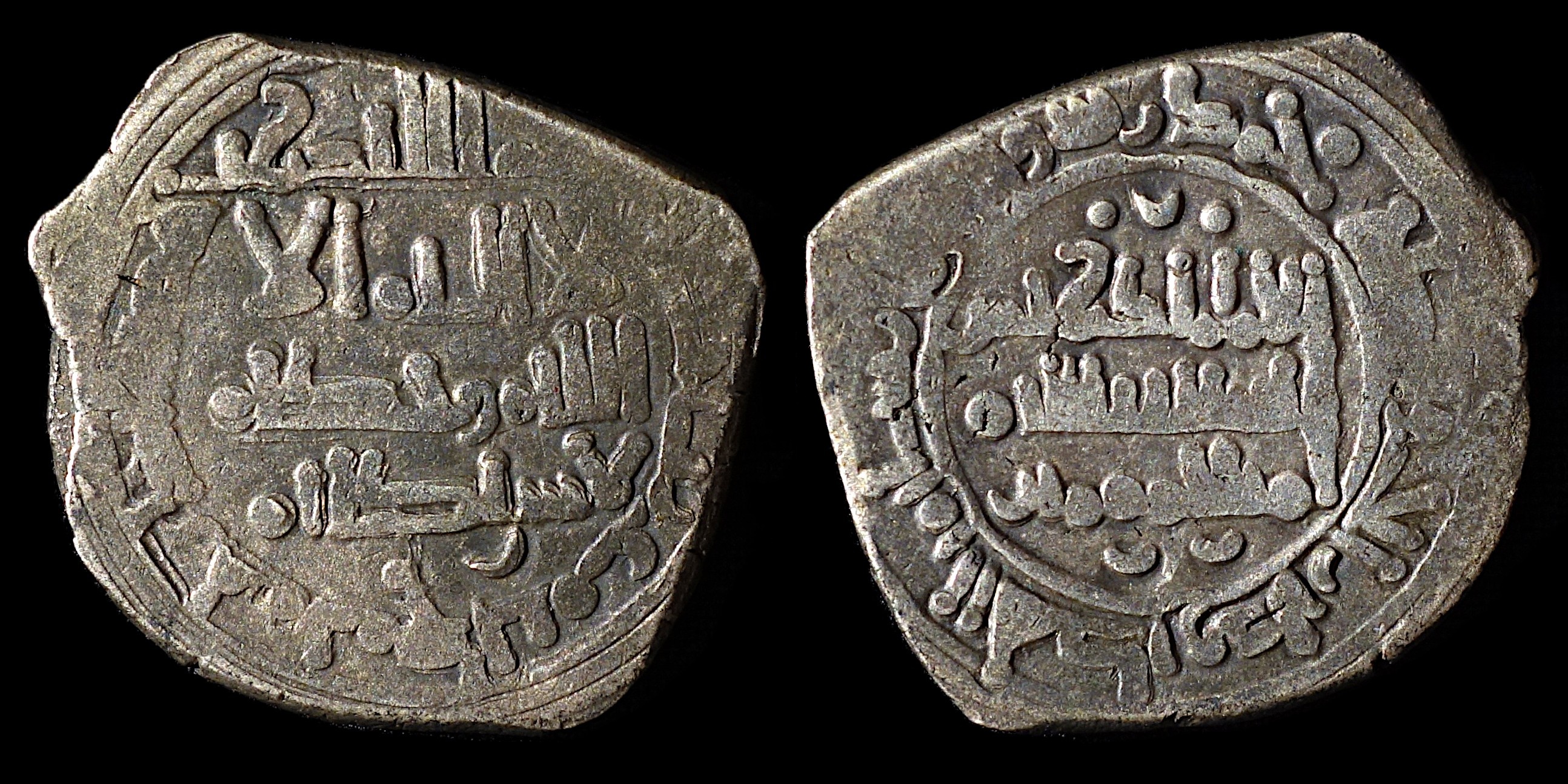
#1.5.6.3.1 Bādīs b. Ḥabbūs Double dirham (8.09 g, 25 × 22 mm) Madīnat Gharnāṭa, no date Vives 852, Medina pp. 235–237, Album G372 Citing the Hammudid caliph Idris al-ʿAlī Click on the image to enlarge it. Comments? webmaster@coins.alif2.fr |
Back to top
Sumaydihids of Almeria (433–484 A.H. / 1042–1091 A.D.)
Almeria became part of the territories of the Taifa of Valencia in 429 A.H. (Ariza-2 p. 130), and
the Amirid ʿAbd al-ʿAzīz of Valencia entrusted Almeria to his son ʿAbd (or ʿUbayd) Allah, granting
him the title of al-Nāṣir (the protector). The latter soon died, and ʿAbd al-ʿAzīz then delegated
the government of Almeria to his brother-in-law and minister Maʿn b. Ṣumādiḥ al-Tujībī. The Banu
Ṣumādiḥ belonged to a branch of the Tujībīds, who had been settled in the Upper March (the northern
frontier) of al-Andalus since the beginning of the conquest. Maʿn rebelled against his brother-in-
law and declared his independence, and Almeria became an independent taifa (Ariza-2 p. 134).
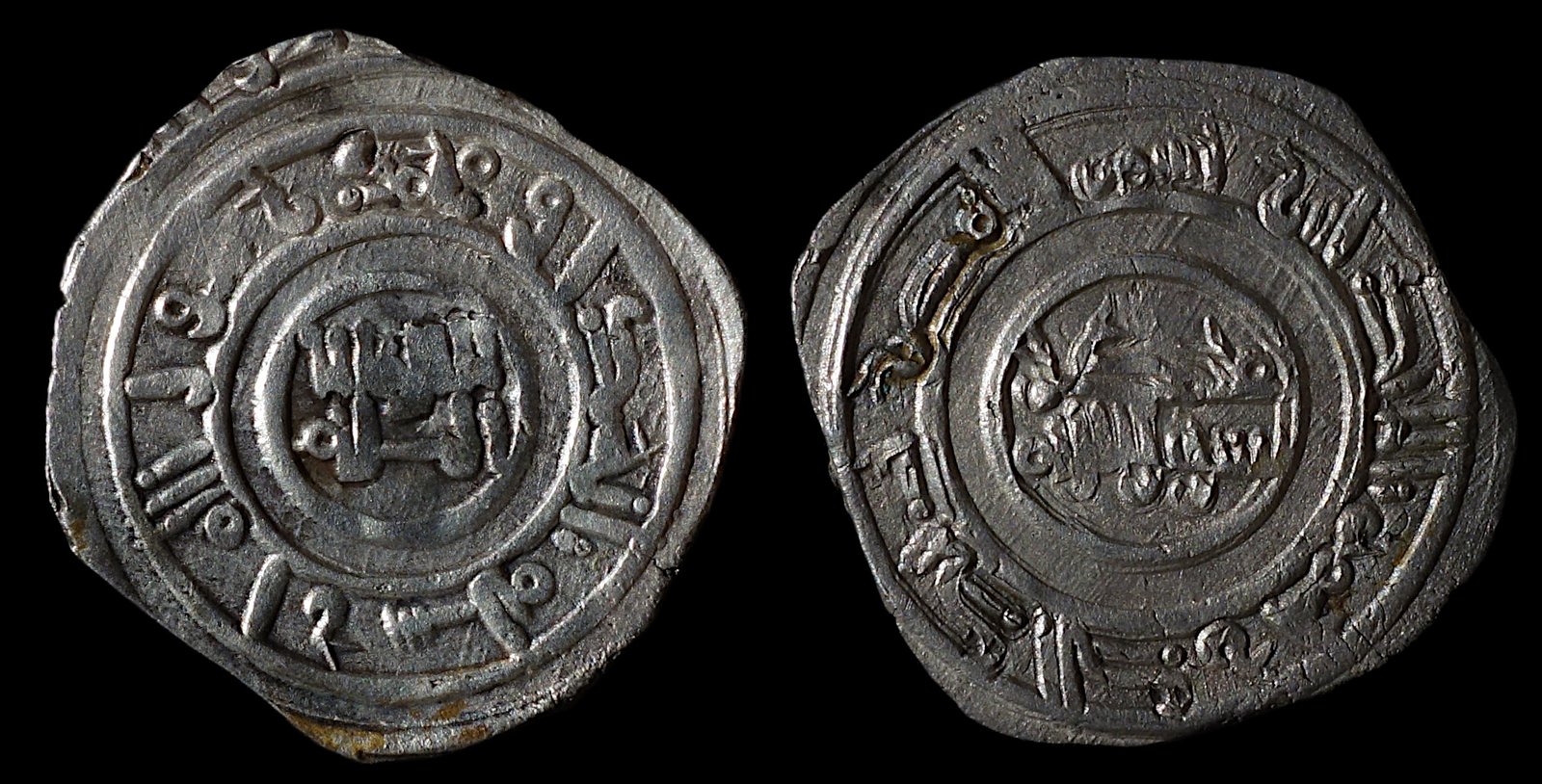
#1.5.7.5.3 Maʿn ben Muḥammad ibn Ṣumādiḥ Dirham (4.03 g, 25 × 22 mm) al-Andalus, no date Medina 87, Vives 1041, Album 399 Click on the image to enlarge it. Comments? webmaster@coins.alif2.fr |
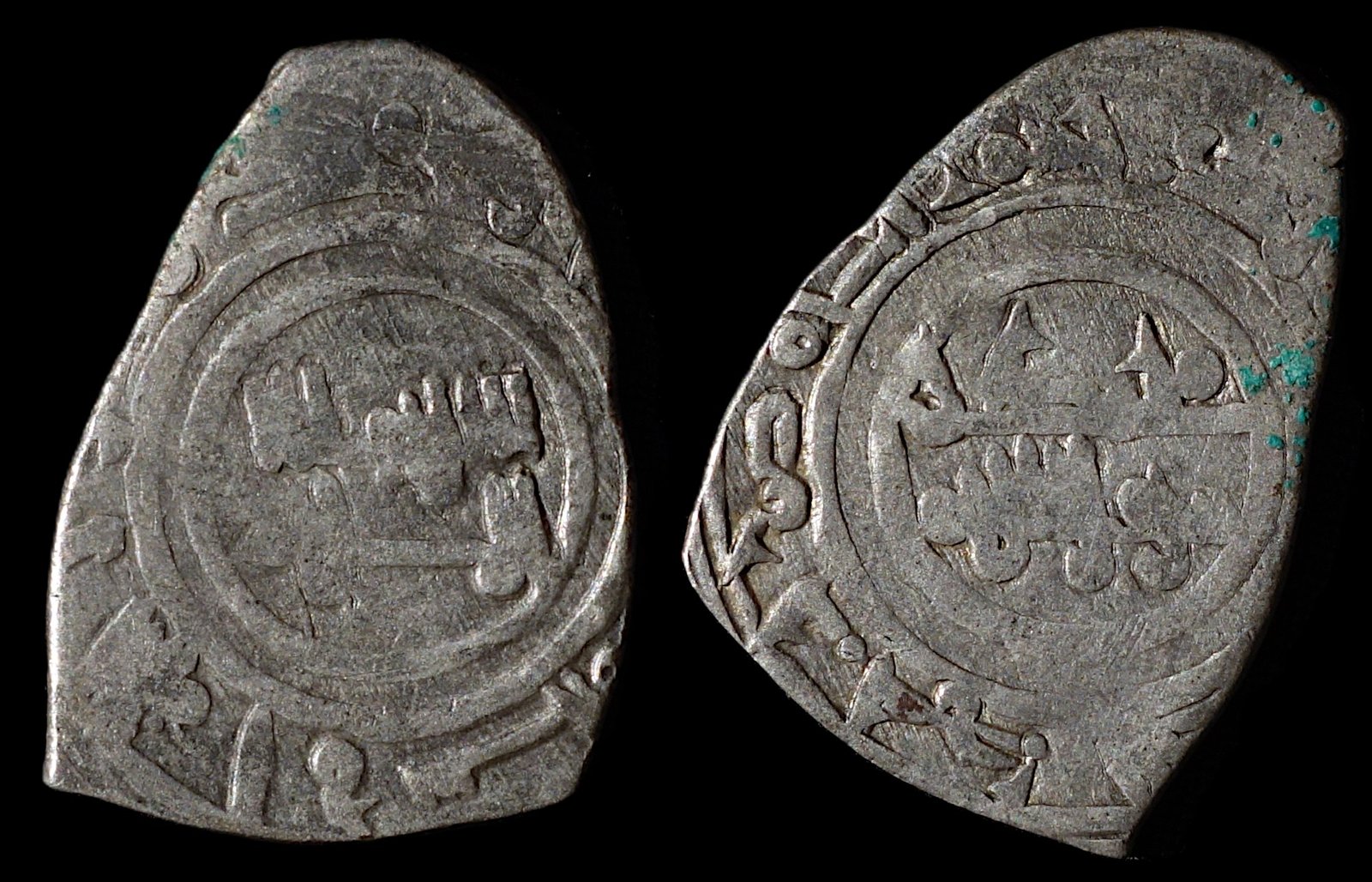
#1.5.7.5.2 Maʿn ben Muḥammad ibn Ṣumādiḥ Dirham (2.97 g, 16 × 24 mm) “Bismillah duriba bi [Almeria or Al Andalus]”, no date Medina 86 or 87, type of Vives 1040, Album 399 Click on the image to enlarge it. Comments? webmaster@coins.alif2.fr |
Back to top
Aftasids of Badajoz (413–487 A.H. / 1022–1094 A.D.)
The Banu al-Aftas were Berbers of the Miknasa tribe who arrived in the Iberian Peninsula
at the time of the Arab conquest of al-Andalus and joined the forces of Tariq ibn Ziyad.
As a result, by the time the civil war began, they were already deeply rooted in the region,
Arabized, and largely assimilated into Andalusi society. Like many others, they claimed a noble Arab
lineage and, in their particular case, asserted a Himyarite origin and affiliation with the Yemeni
tribal branches. They founded the Taifa of Badajoz in 413 A.H. / 1022 A.D. (Ariza-2, pp. 135–136).
The last emir of the taifa, ʿUmar al-Mutawakkil, supported Almoravid intervention in Spain and
fought alongside them at the Battle of al-Zallaqa (Sagrajas), which took place within his own
territory on 12 Rajab 479 A.H. / 23 October 1086 A.D. He and his family were killed by the Almoravid
general Sir ibn Abū Bakr in 487 A.H. / 1095 A.D., following a reversal of alliances (EI2, Aftasids).
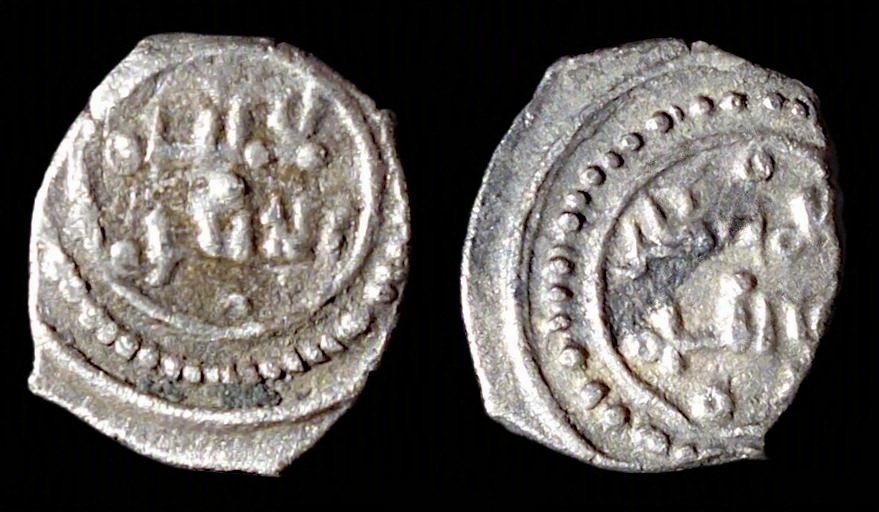
#1.5.12.5.2 Al-Mutawakil ʿalā Allāh Abū Ḥafṣ ʿUmar Half qīrāṭ (0.40 g, 8 × 9 mm) No mint, no date Vives 1021, Benito X16, Medina 72, Album 400B Ex Gaspariño Collection. Click on the image to enlarge it. Comments? webmaster@coins.alif2.fr |
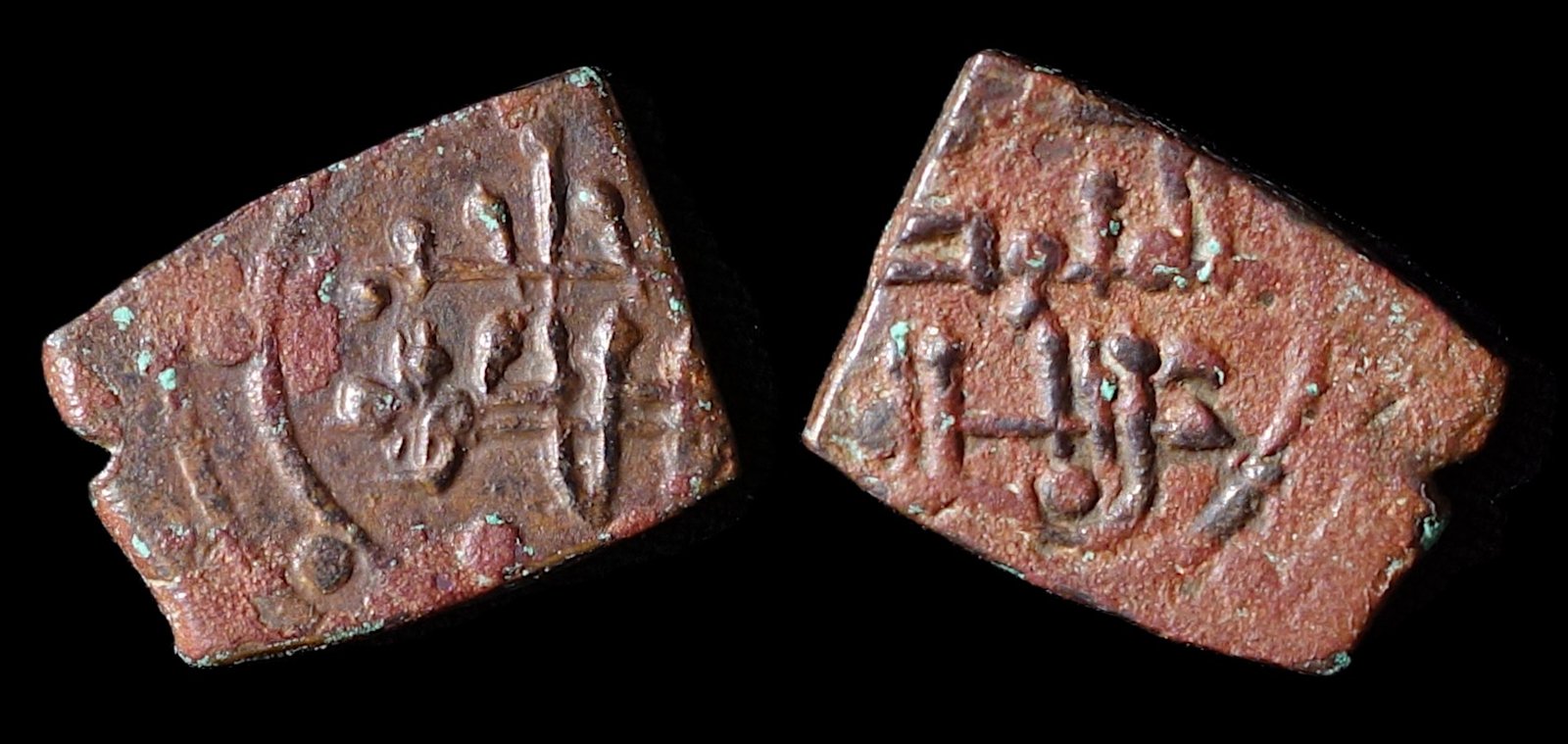
#1.5.12.5.3 Al-Mutawakil ʿalā Allāh Abū Ḥafṣ ʿUmar Dirham (Handūsī) (1.44 g, 10 × 14 mm) Mint missing (al-Andalus), date missing Vives 1007, Francés 50, 51 Click on the image to enlarge it. Comments? webmaster@coins.alif2.fr |
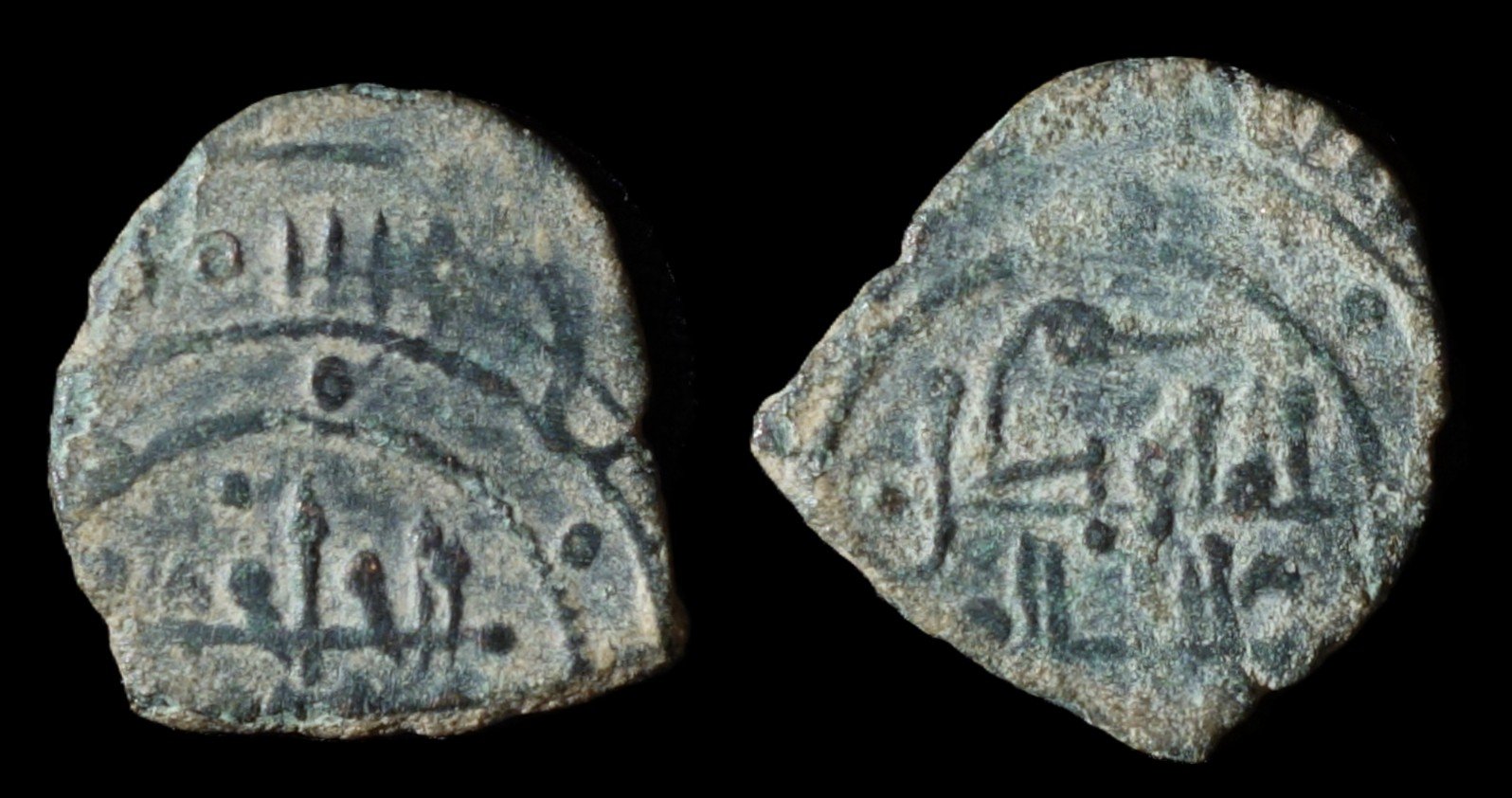
#1.5.12.5.1 Al-Mutawakil ʿalā Allāh Abū Ḥafṣ ʿUmar Dirham (Handūsī) (0.95 g, 12 × 14 mm) Mint missing (al-Andalus), date missing Vives 1007, Francés 50, 51 Click on the image to enlarge it. Comments? webmaster@coins.alif2.fr |
Back to top
Kingdom of Tortosa (427–453 A.H. / 1036–1061 A.D.)
The Taifa of Tortosa was established by freed servants of al-Manṣūr ʿĀmir.
Muqātil (427–445 A.H. / 1036–1053 A.D.)
In 431 A.H. / 1039–1040 A.D., the eunuch Muqātil (or Muqābil), one of the freed servants of
al-Manṣūr ibn Abi ʿĀmir, established himself as king in the city of Tortosa. He recognized the
supposed caliph Hishām II and assumed the title Mu`izz al-Dawla (Fortifier of the State),
later adopting, from 438 A.H. / 1046–1047 A.D. onwards, the titles Sayf al-Milla (Sword of the
Community) and/or Sayf al-Mulk (Sword of the Realm). Reflecting the grandeur of his titles, his
court was renowned for its magnificence: “among his governors and secretaries were men such as no
other ruler of his time possessed...”. From 441 A.H. / 1049–1050 A.D., Muqātil continued to
recognize the supposed caliph Hishām II, but ceased to mention him with the caliphal title
(amir al-mu´minin - Commander of the Faithful) on his coinage,
just as Aḥmad I of Zaragoza did at the same date (Ariza-2, pp. 101–102).
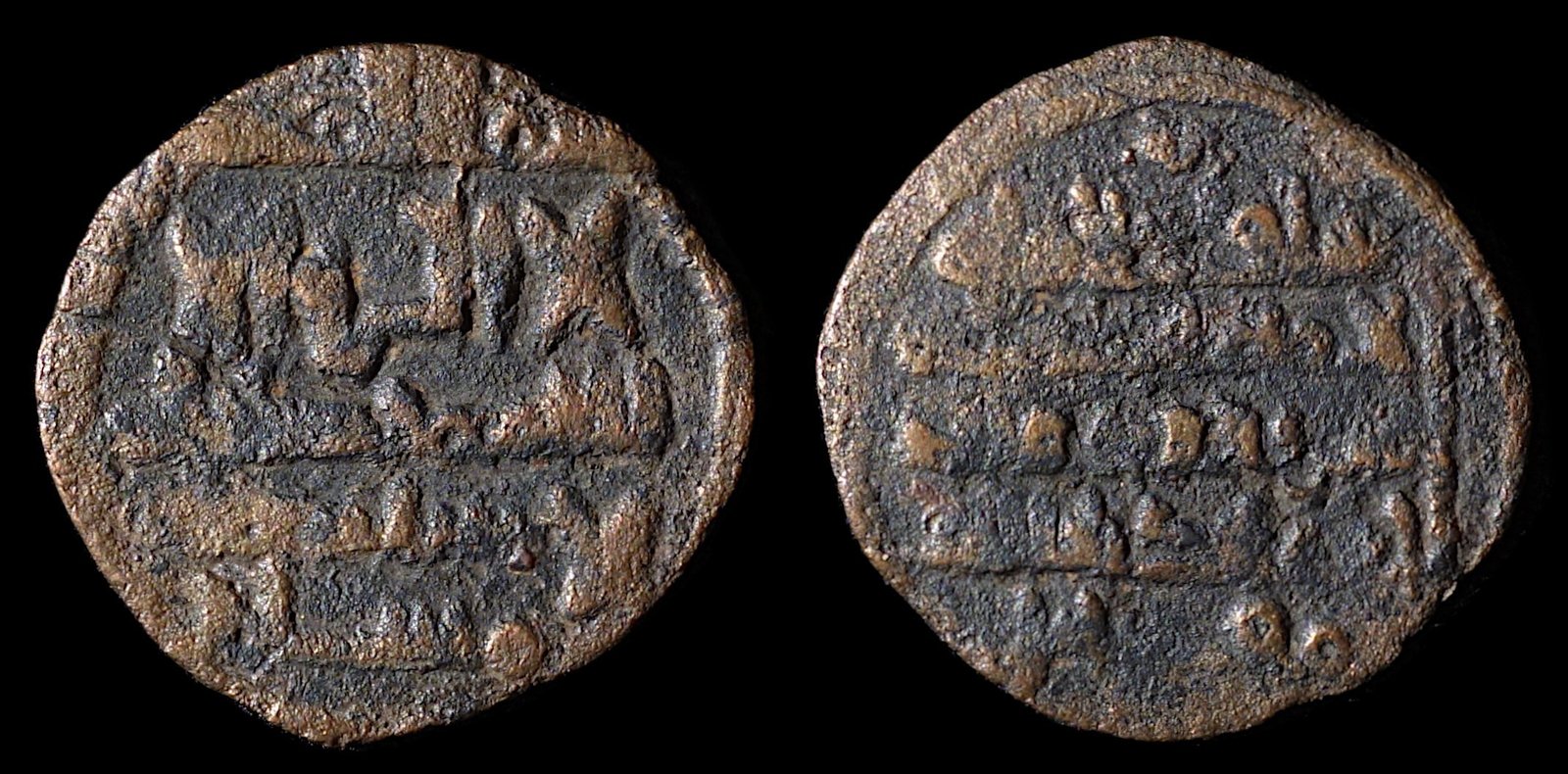
#1.5.35.1.1 Muqātil Copper dirham (1.44 g, 19 mm) with local official Musallam (436–440 A.H.) (obv.) and title Sayf al-Milla (rev.), citing Hishām II (rev.) Mint missing (Ṭarṭūsha), date missing Type of Vives 1273, Album 394 Citing Hishām II with the caliphal title. Click on the image to enlarge it. Comments? webmaster@coins.alif2.fr |
Back to top
Jahwarids of Cordoba (422–461 A.H. / 1031–1069 A.D.)
The Banu Jahwar were a family of Arab origin, descended from those who had arrived in al-Andalus
during the 2nd century A.H. (8th century A.D.) and were therefore deeply rooted in the country.
Members of this family distinguished themselves as viziers and high-ranking dignitaries at the
Cordoban court. At the time of the collapse of the Caliphate, weary of so much instability and
intrigue, the viziers unanimously decided to expel all the Umayyads from Cordoba,
proclaiming—albeit without the necessary legitimacy—“the complete abolition of the Caliphate,
because it was no longer appropriate.” Although this decision was unanimous,
it was in reality Abū l-Ḥazm b. Jahwar who orchestrated the expulsion of the Umayyads and whom
the viziers chose to govern Cordoba. Thus, in 422 A.H., Abū l-Ḥazm b. Jahwar became the
first ruler of the dynasty, without, however, claiming the Caliphate (Ariza-2, pp. 139–140).
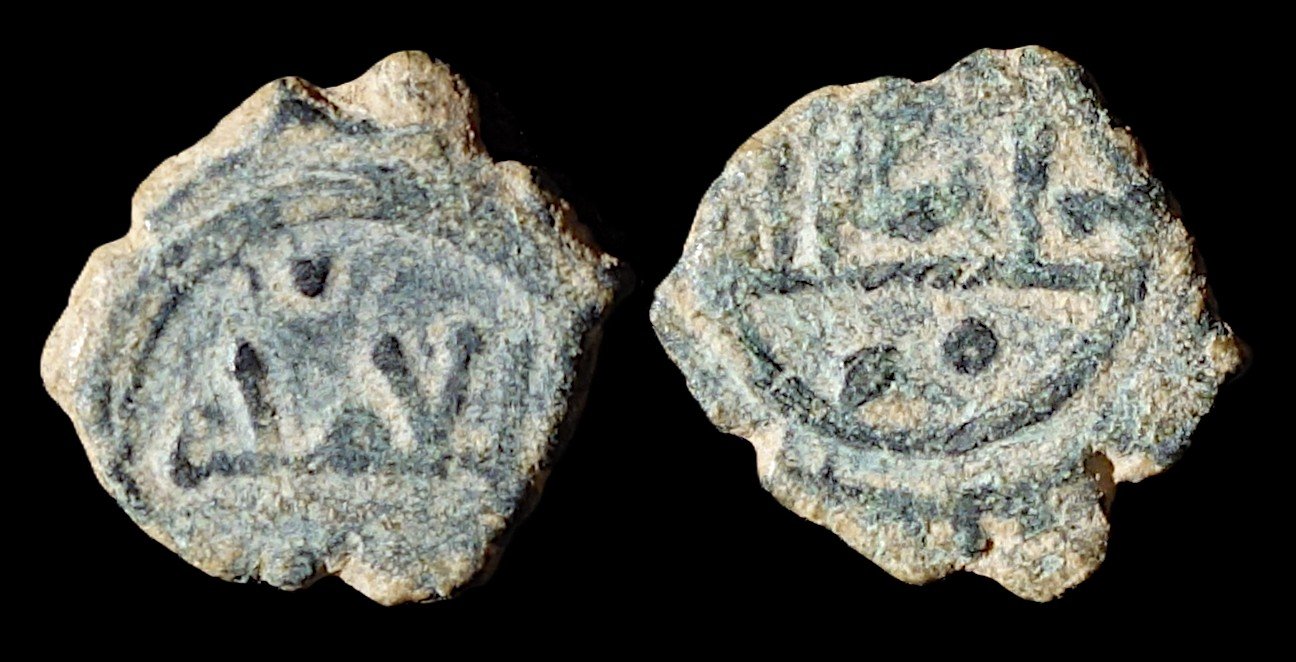
#1.5.10.00.1 Jahwarids of Cordoba Anonymous Fractional Copper dirham (0.79 g, 10 mm) citing ʿAbd Allāh (rev.) Mint missing, date missing Francés p.113, Fro.-Med. X.3, Frochoso-3 BY12 Click on the image to enlarge it. Comments? webmaster@coins.alif2.fr |
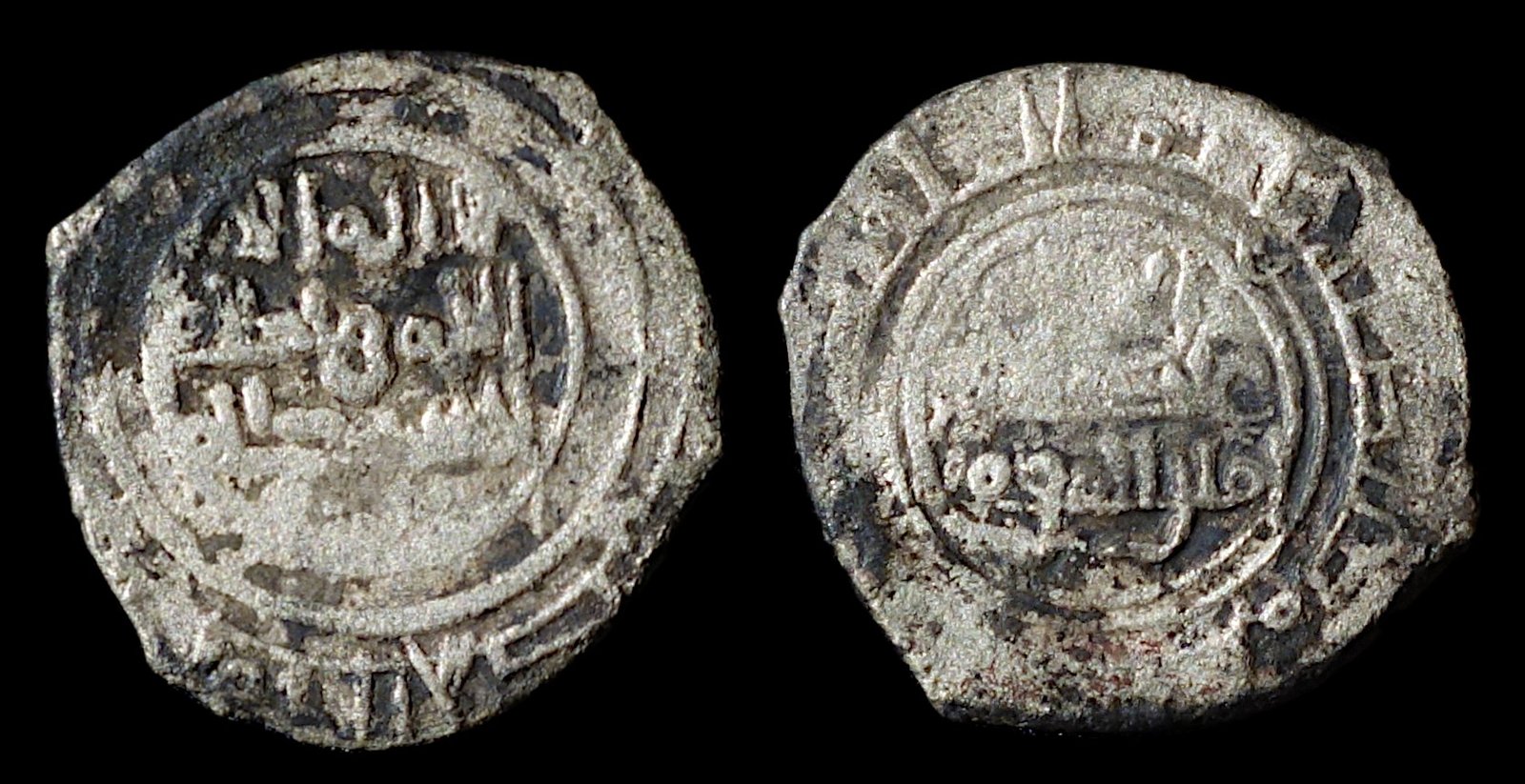
#1.5.10.00.2 Jahwarids of Cordoba Anonymous Dirham (1.49 g, 16 mm) citing ʿAbd Allāh (rev.) Mint missing, date missing Francés 352, 353, 354 and a picture p.11, Vives 1397, Medina 118, Frochoso-3 BY8 Click on the image to enlarge it. Comments? webmaster@coins.alif2.fr |
Back to top
ʿAbbādids of Sevilla (414–484 A.H. / 1023–1091 A.D.)
The ʿAbbādids were an important Sevillian family of Yemeni Arab origin. They arrived in the
Iberian Peninsula from Syria with the troops in 125 A.H. / 743 A.D. and successfully established
themselves there, attaining a prominent position in both Cordoba and Seville. Almanzor himself
appointed Ismāʿīl b. ʿAbbād as qadi of Seville (Ariza-2, p. 82).
Al Mu`tadid ʿAbbād (433–461 A.H. / 1042–1069 A.D.)
ʿAbbād succeeded his father at the head of the Taifa of Sevilla. He had once been held hostage in
Malaga by the Hammudid caliph Yaḥyā b. ʿAlī, an episode that contributed to the deep hostility
between the ʿAbbādids of Sevilla and the Hammudids. It is even said that he kept, for his
own satisfaction, the head of Yaḥyā b. ʿAlī, cleaned, perfumed, and carefully identified by a label
attached to one of its ears. He struck coinage in the name of the supposed Hishām II, presenting
himself on the coins as his ḥājib (chamberlain). From 439 A.H. his own laqab of Al Mu`tadid bi-Llah
(supported by God) appeared on his coins (Ariza-2, p. 84).
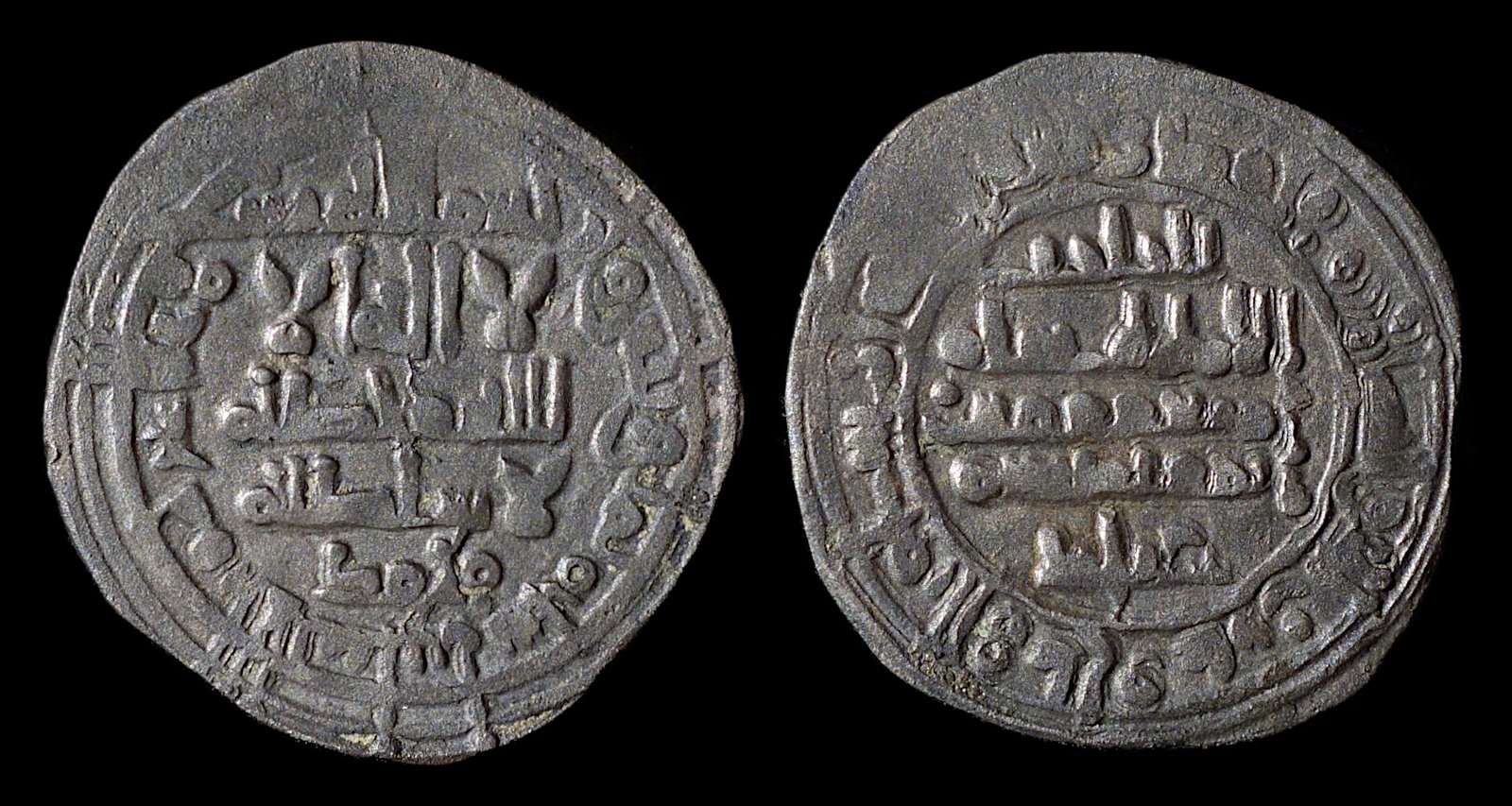
#1.5.3.2.1 Al Mu`tadid ʿAbbād Dirham (3.48 g, 23 mm) citing Muḥammad (obv.) and Hishām II (rev.) al-Andalus, 438 A.H. Vives 888, Album 402.1 Ex Gaspariño Collection. Click on the image to enlarge it. Comments? webmaster@coins.alif2.fr |
Back to top
Al Mu`tamid Muḥammad (461–484 A.H. / 1069–1091 A.D.)
Upon his death in 461 A.H., al-Muʿtaḍid left the largest and most
powerful of the Taifa kingdoms to his son Muḥammad,
who adopted the honorific surname al-Muʿtamid.
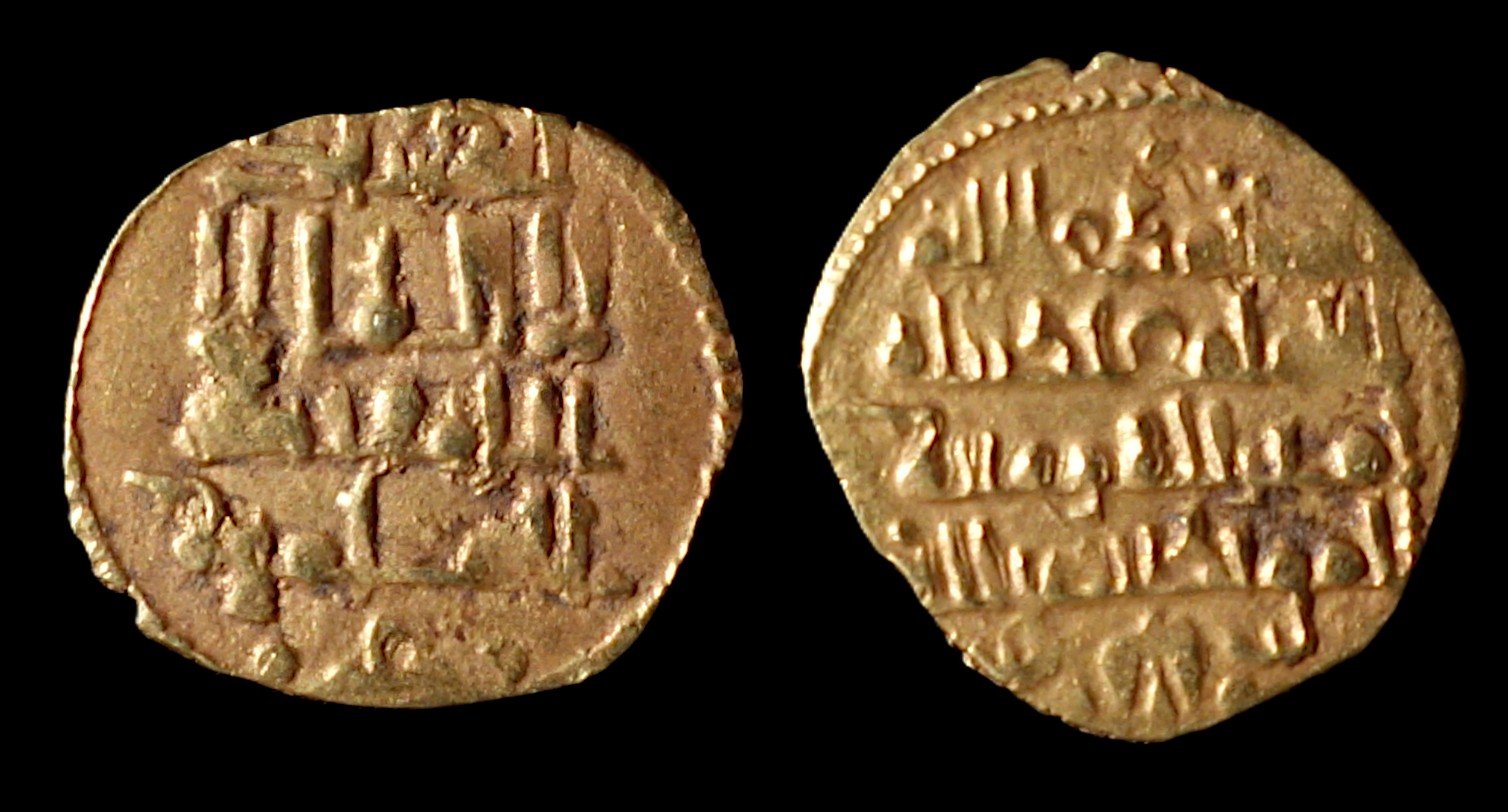
#1.5.3.3.2 Al Mu`tamid Muḥammad Fractional dinar (0.94 g, 13 × 14 mm) citing the heir al-Rashīd (obv.) and ʿAbd Allāh (rev.) No mint, no date Vives 978, Prieto 421e, Album 403A Click on the image to enlarge it. Comments? webmaster@coins.alif2.fr |
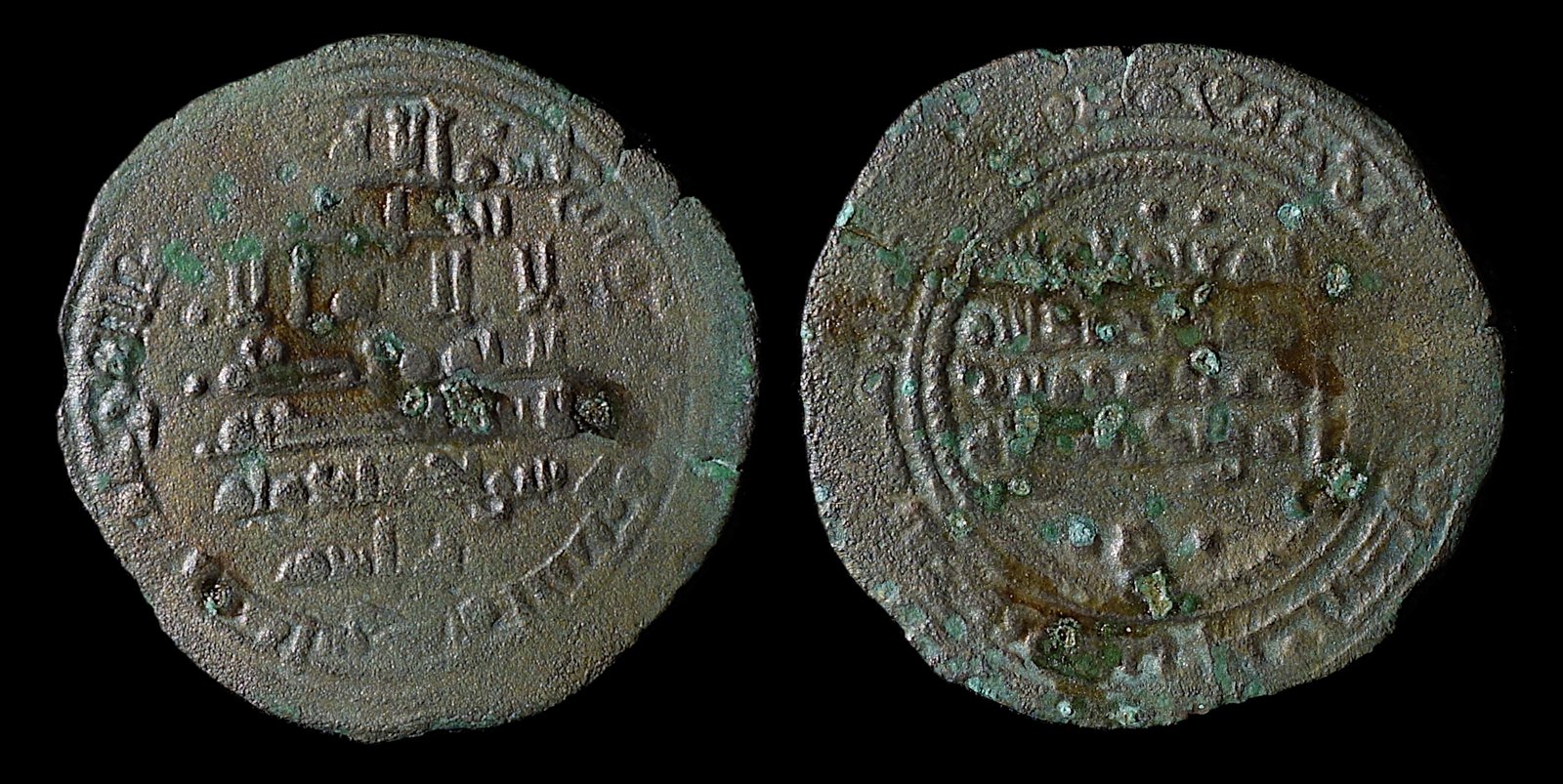
#1.5.3.3.1 Al Mu`tamid Muḥammad Copper dirham (2.49 g, 26 mm) citing al-ḥājib Siraj al-Dawla (obv.), Ashim (obv.) and ʿAbd Allāh (rev.) al-Andalus, 462 A.H. Vives 940, Album 404.1 Click on the image to enlarge it. Comments? webmaster@coins.alif2.fr |
Back to top
Hudids of Zaragoza and Denia (431–503 A.H. / 1039–1110 A.D.)
The Hudids were of Arab origin. They had arrived in the Iberian Peninsula at the time of the
conquest as part of the Palestinian jund (military contingent) (Ariza-2 p. 114).
ʿImād al-Dawla Aḥmad I (441–475 A.H. / 1049–1083 A.D.)
Aḥmad I, ruler of Zaragoza, struck coinage in the name of Hishām II at Zaragoza (Saraqusṭa),
presenting himself as his ḥājib (chamberlain) and bearing the laqab ʿImād al-Dawla (Pillar of the
State). His omission of the caliphal title (amir al-mu´minin – Commander of the Faithful) from
his coinage, except on one dirham type of 441 A.H. (Vives 1172), reveals a loss of confidence in the
legitimacy of the supposed Hishām II and reduces this legitimizing fiction to the sphere of
spirituality alone (Ariza-2, p. 115).
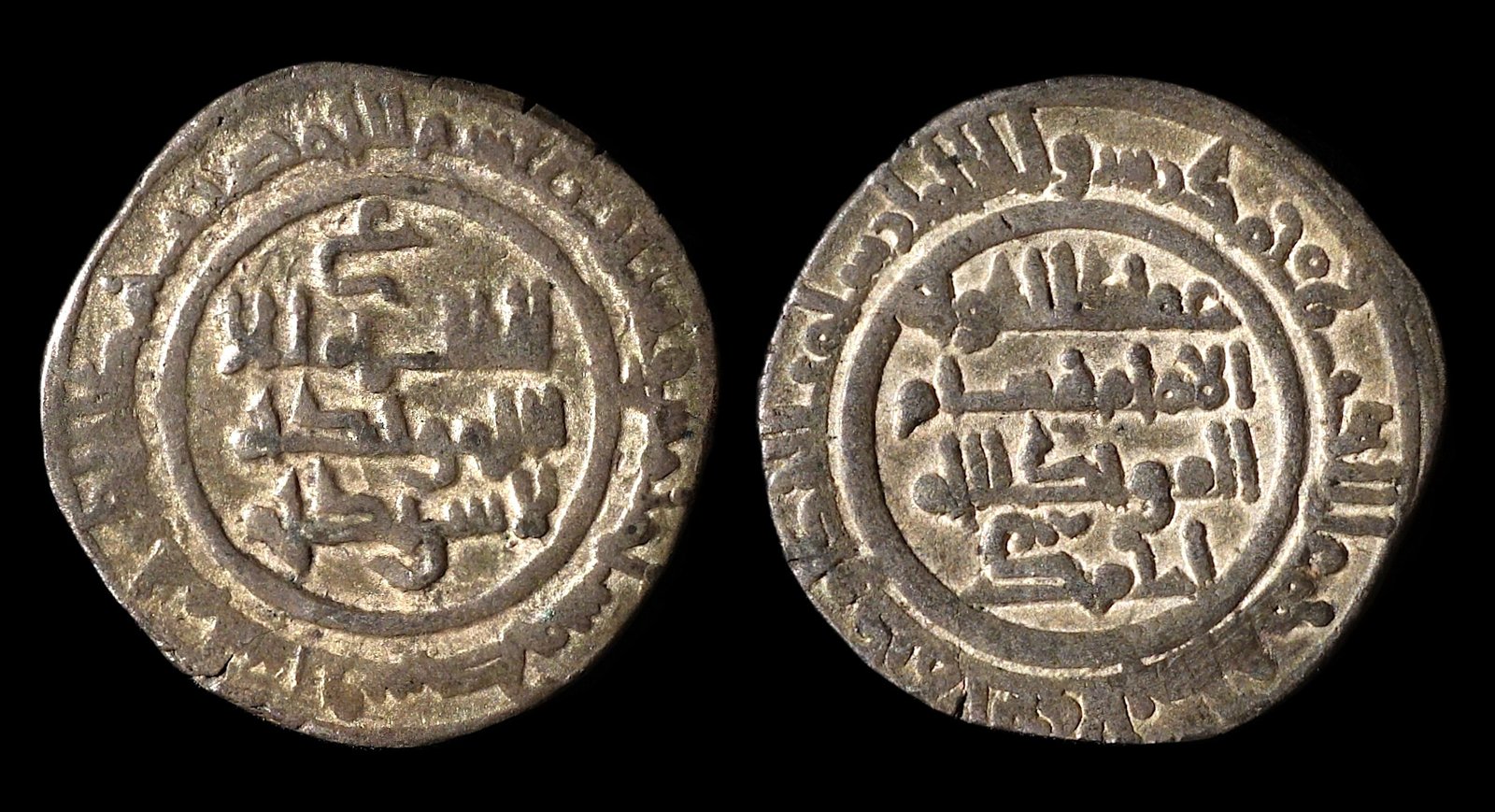
#1.5.17.5.1 ʿImād al-Dawla Aḥmad Dirham (4.23 g, 22 mm) Saraqusṭa, (4)65 A.H. Vives 1202, Medina p. 273, Album 388 Citing Hishām II without the caliphal title. Click on the image to enlarge it. Comments? webmaster@coins.alif2.fr |
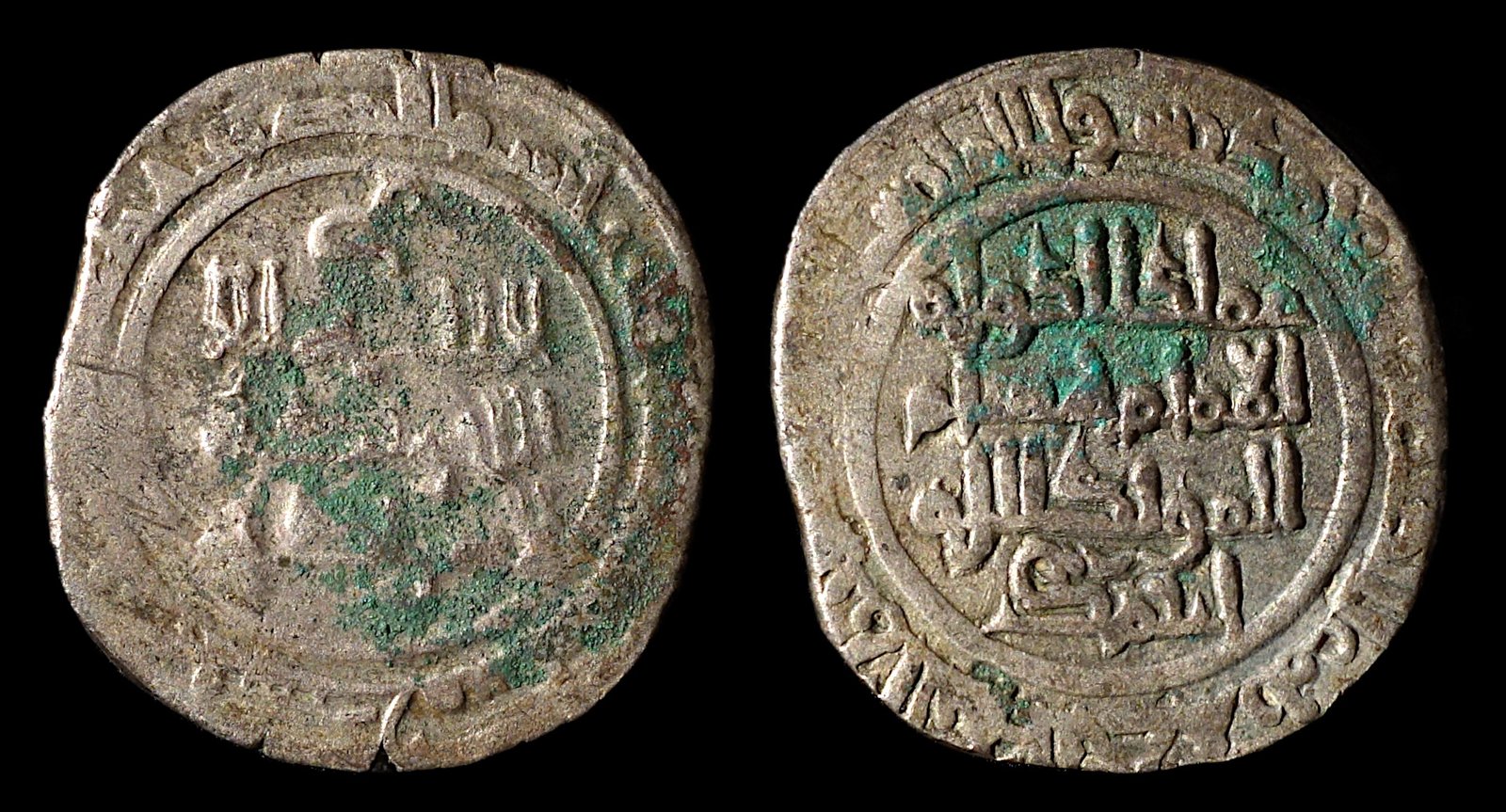
#1.5.17.5.2 ʿImād al-Dawla Aḥmad Dirham (4.79 g, 21 × 23 mm) Saraqusṭa, date missing Vives 1202, Medina p. 273, Album 388 Citing Hishām II without the caliphal title. Click on the image to enlarge it. Comments? webmaster@coins.alif2.fr |
Back to top
ʿImād al-Dawla Mundhir (474–483 A.H. / 1081–1090 A.D.)
In 474 A.H. or 475 A.H., Aḥmad I of Zaragoza fell ill and died in the midst of war, while attempting
to seize Valencia with the support of Alfonso VI. Upon his death, the taifa of Zaragoza was once
again divided into two: Zaragoza and the western territories passed to his son Yūsuf, while Lleida,
Tortosa, and Denia, together with the coastal territories, fell into the hands of his other son,
Mundir, who, like his father, assumed the title of ḥājib (chamberlain) and the laqab ʿImād al-Dawla
(Pillar of the State). The rivalry between the two brothers dominated the following years, yet
neither succeeded in reunifying the former territories of the vast taifa of Zaragoza (Ariza-2, p. 206).
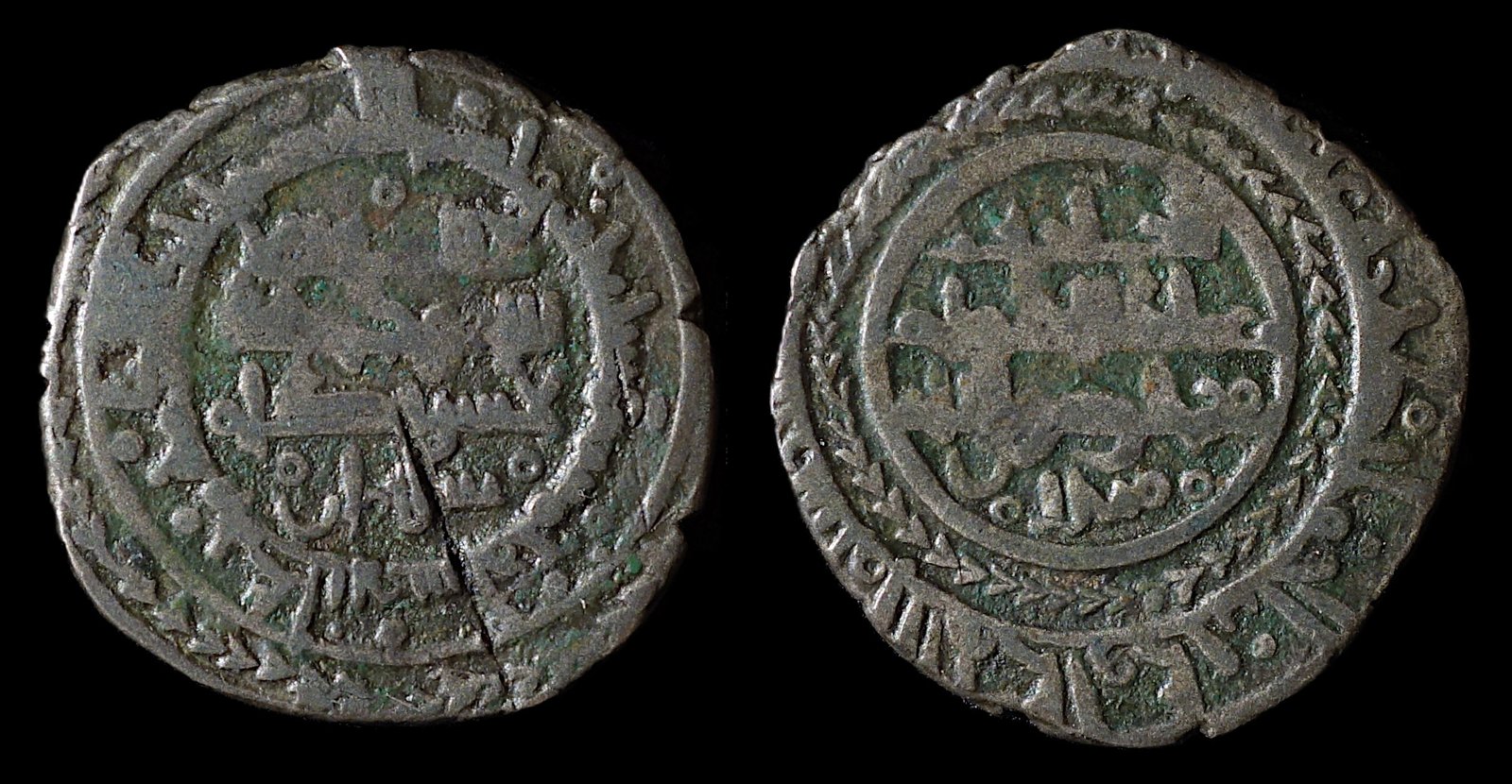
#1.5.17.7.1 ʿImād al-Dawla Mundhir Dirham (5.06 g, 22 mm) citing the heir Sulaymān (obv.) Denia, 475 A.H. Vives 1327, Album 392 Click on the image to enlarge it. Comments? webmaster@coins.alif2.fr |
Back to top
Al-Musta`in Aḥmad II Sayf al-Dawla (476–503 A.H. / 1083–1110 A.D.)
Al-Musta`in Aḥmad Sayf al-Dawla was the grandson of Aḥmad I (son of Yūsuf).
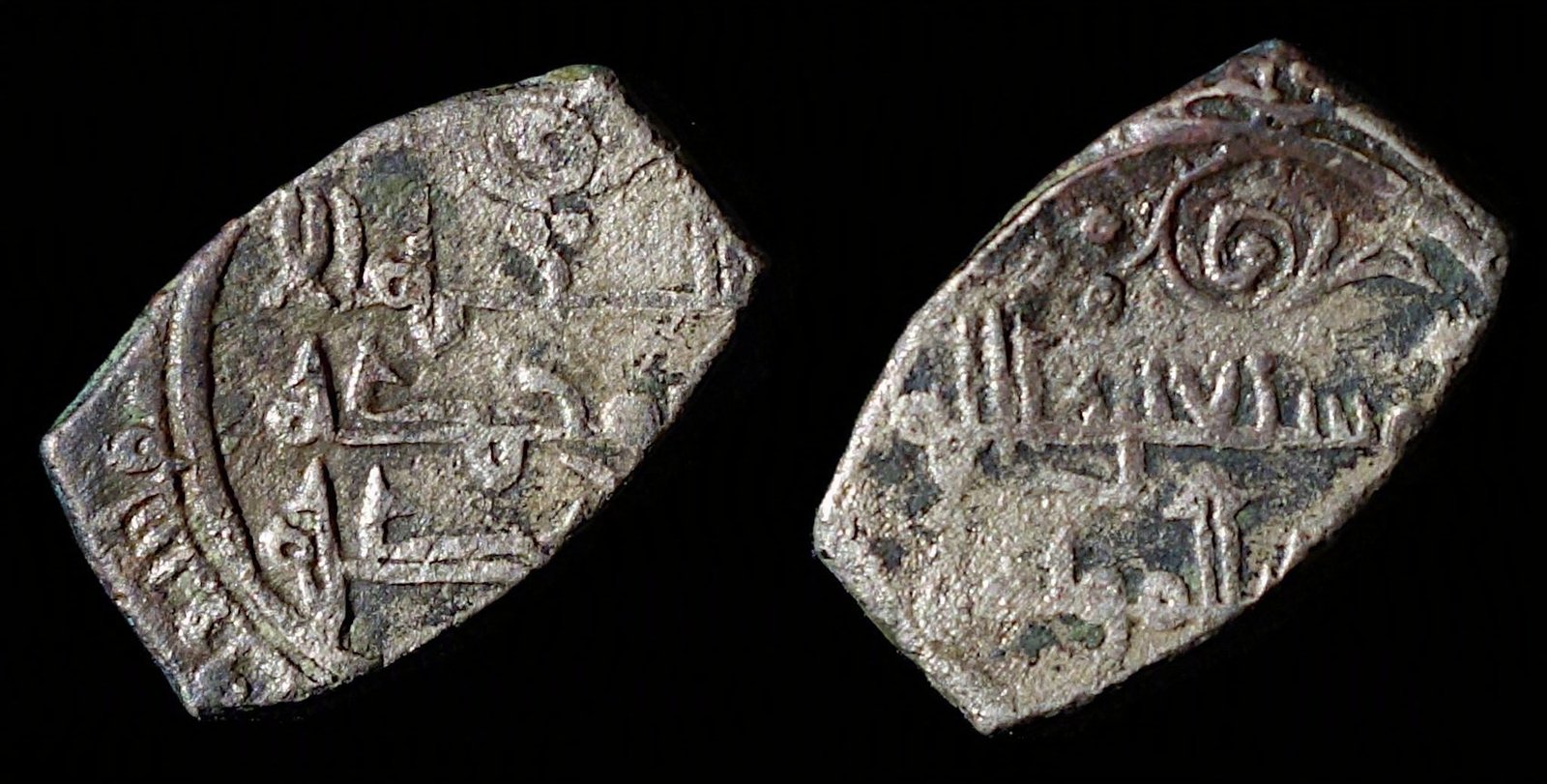
#1.5.17.8.1 Al-Musta`in Aḥmad II Sayf al-Dawla dirham (Handūsī) (1.54 g, 16 × 10 mm) Mint missing, date missing Type of Vives 1223, Francés 235, Prieto 271 Click on the image to enlarge it. Comments? webmaster@coins.alif2.fr |
Back to top
NEXT => the Almoravids
PREVIOUS => the Hammudids
BACK to the Main Page